
March 2, 2026
March is designated as Women’s History Month, with International Women’s Day falling on March 8. At this time, we look back and honor the achievements and contributions of many remarkable women who have been an important part of the Appalachian community.
Last year, on Women’s Equality Day, we highlighted the Appalachian women who inspire us from writers like Nikki Giovanni, and Marilou Awiakta, to activists like Judy Bonds, bell hooks, and Rachel Carson, and musicians like Hazel Dickens and Dolly Parton. See the full blog here. These educators, activists, artists, and visionaries were key advocates for healthcare, education, women’s rights, worker’s rights, and environmental protection within the region, and they also belong to a global community of persevering mountain women around the world.
This International Women’s Day, we turn our attention to one of these women in particular to take a closer look into the life of Hazel Dickens (1935–2011), a musician whose sincere songs inspired by her upbringing in West Virginia rose up against the odds to champion women’s and worker’s rights.
Hazel Dickens

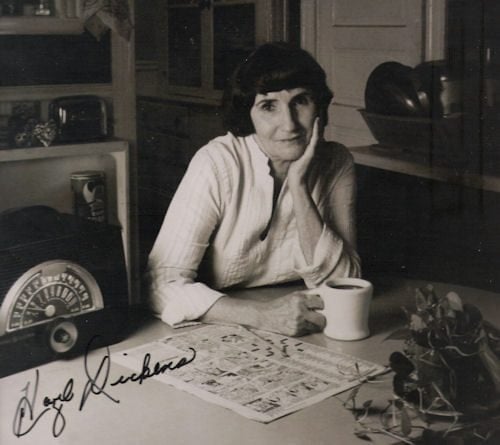
Born in Montcalm, West Virginia, Hazel grew up in a mining town with several family members working as miners. After WWII, at just 16 years old, she became a part of a growing group of Appalachians moving north to Baltimore to find work. In Baltimore, she took day jobs to make ends meet, but more importantly, it was here that she met Mike and Pete Seeger and joined her first bluegrass band, The New Lost City Ramblers. This group played at a variety of formal and informal venues within the city’s emerging bluegrass scene, supported by the new influx of Appalachians like herself. In a far away city, bluegrass music brought Hazel back to her roots in West Virginia and helped her listeners do the same.
The Era of Hazel & Alice
Through the bluegrass grapevine, Hazel soon met Alice Gerrard. Though Alice was born in Seattle and grew up moving around the Western US, like Hazel, she had found a home in bluegrass. It wasn’t long before Hazel and Alice decided to team up to take on the folk music scene. Together they began a journey of friendship, breaking gendered boundaries, and an initially unintentional activism through song.
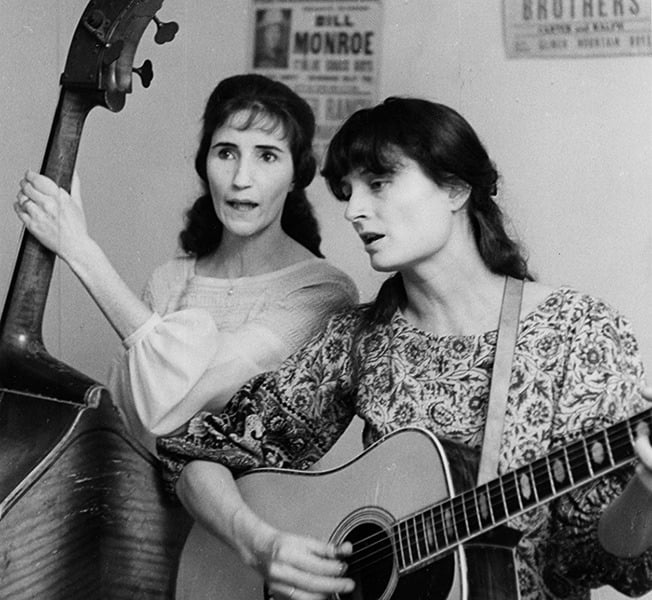
Hazel and Alice playing music together
In the 1960’s world of male-dominated bluegrass, Hazel and Alice immediately stood out as a female-fronted band. They became a recognizable icon for female empowerment as they made their own decisions, selecting their own musicians and songs to perform. Aside from their characteristic sound, Hazel and Alice’s music offered a perspective that had been lacking before: songs that acknowledged their personal experience as women in the bluegrass scene and the wider world beyond. They recorded a number of acclaimed albums together, and they were invited to perform around the country.
Train on the Island
This is a popular upbeat song which exemplifies the bluegrass style and Hazel and Alice’s place within it.
Don’t Put Her Down You Helped Put Her There
This song reflects on the treatment towards herself and other women, which Hazel witnessed while she was doing bar gigs early in her musical career.
“She hangs around
Playing her clownWhile her soul is aching inside
She’s heartbreak’s child
She just lives for your smile
To build her up in a world made by man”
-”Don’t Put Her Down You Helped Put Her There” Hazel Dickens and Alice Gerrard
The Birth of the Activist
In 1966, a politically-active friend, Anne Romaine, asked Hazel and Alice to participate in the Southern Folk Cultural Revival Project’s tour throughout the Southern US. This was a tour designed to call attention to the Civil Rights Movement with a racially-integrated lineup of performers. The experience combined with subsequent performances that happened to coincide with political events such as anti-strip mining campaigns, for example, began to inspire Hazel to explore these themes of justice in her own work.
“I think what happened with her, being on those tours, it gave her permission to speak” – Alice Gerrard reflecting on Hazel’s songwriting in an interview published in 2018.
Hazel turned to her early life in West Virginia for inspiration, writing about the lives of miners and the struggles of systemic inequality and injustices. By reflecting on her experiences and other events of the time, Hazel spoke up for women, workers, and human rights in a form of activism based on sharing raw and honest truths rather than any pre-formed agenda. In this sense, Hazel shows us that there is power in the stories we carry, and that real impact can come from sharing them.
Black Lung
Hazel wrote the song “Black Lung” in memory of her brother who died from the condition after decades of working in the mines. This song aims to give a voice to her brother and all those like him who have been silenced and dismissed in the face of black lung, a preventable but later untreatable disease directly tied to unsafe working conditions in coal mines.
“He’s had more hard luck than most men could stand. The mines were his first love, but never his friend. He’s lived a hard life, and hard he’ll die. Black lung’s done got him. His time is nigh.”
-“Black Lung” by Hazel Dickens
Mannington Mine
This song was written in response to the news of the Mannington Mine Disaster, also referred to as The Farmington Mine Disaster, which took place in November 1968, at the coal mine near Farmington and Mannington in Marion County, West Virginia. This disaster killed 78 miners when they were trapped inside the mine after an explosion. This tragic event stands as a pivotal moment, which led to stricter mine safety regulations within the US.
“They lure you with money, it sure is a sight.
When you may never live to see daylight
With your name among the big headlines
Like that awful disaster at the Mannington mine.”
– “Mannington Mine” by Hazel Dickens
West Virginia My Home
This personal song rings with a sense of loss that characterizes the displacement of the many Appalachians who felt they had little choice but to leave in search of work outside the region. It is a longing for home, and the determination to keep that home alive in spite of the years spent away from it.
Well I paid the price for the leavin’And this life I have is not one I thought I’d find.Just let me live, love, let my cry, but when I go just let me dieAmong the friends who’ll remember when I’m gone.
“West Virginia, oh my home.West Virginia, where I belong.
In the dead of the night, in the still and the quiet I slip away like a bird in flight
Back to those hills, the place that I call home.
-“West Virginia My Home” by Hazel Dickens

Hazel’s songs reached new audiences when they began to appear in films in the 1970s. Four of her songs were contributed to the soundtrack of Harlan County, USA, a documentary about the Brookside Strike at the Duke Power Company-owned Eastover Coal Company’s Brookside Mine and Prep Plant in Harlan County, Kentucky. Starting in 1973, workers and their families fought for union recognition within the United Mine Workers of America (UMWA) along with higher safety standards and medical benefits. After 13 long months and a series of violent incidents, workers finally won a union contract which included the formation of a Worker’s Safety Committee to increase safety measures. This poignant documentary, set to the sound of Hazel’s music, won the Academy Award for Best Documentary.
This is Hazel’s powerful rallying song within the Harlan County USA’s soundtrack.
“We’ve been shot, we’ve been jailed, lord its a sinWomen and children stood right by the men
We’ve got a union contract that keeps the worker free
They’ll never shoot that union out of me”
-“They’ll Never Keep Us Down” by Hazel Dickens
Through her songwriting, Hazel was able to bring issues of worker’s and specifically miner’s rights into the national spotlight. In 1980, she had the honor of receiving an invitation to perform at Jimmy Carter’s Labor Day concert at the White House, a fitting occasion to share her message and her music with the country.
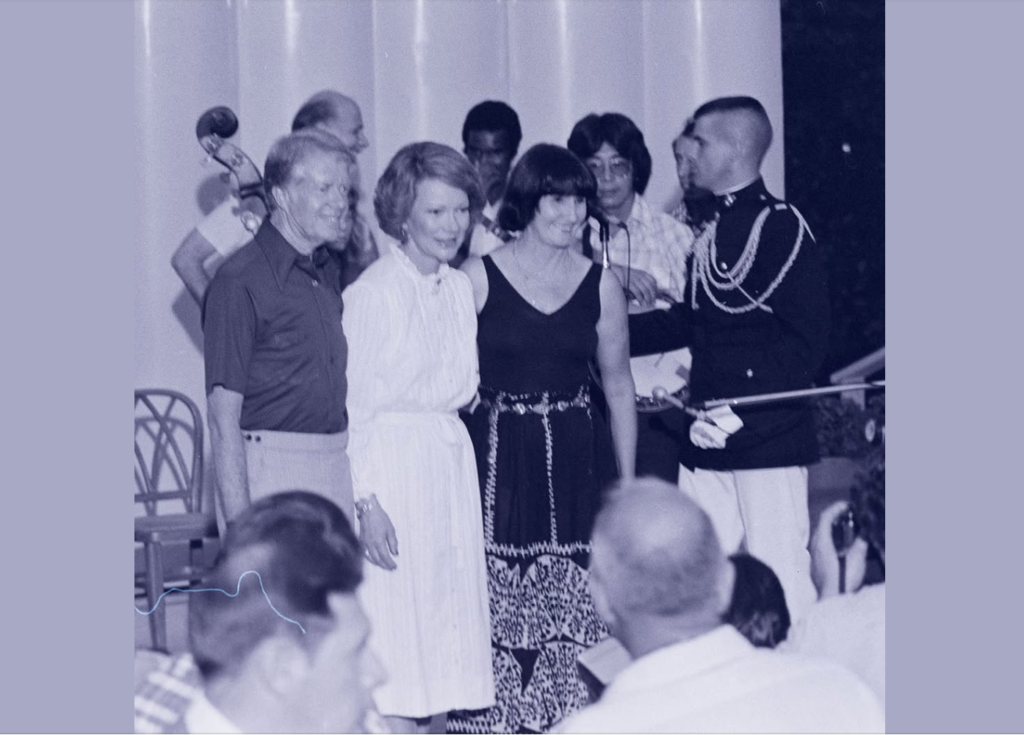
Hazel Dickens with President Jimmy and Rosalynn Carter
Remembering Hazel Dickens Today
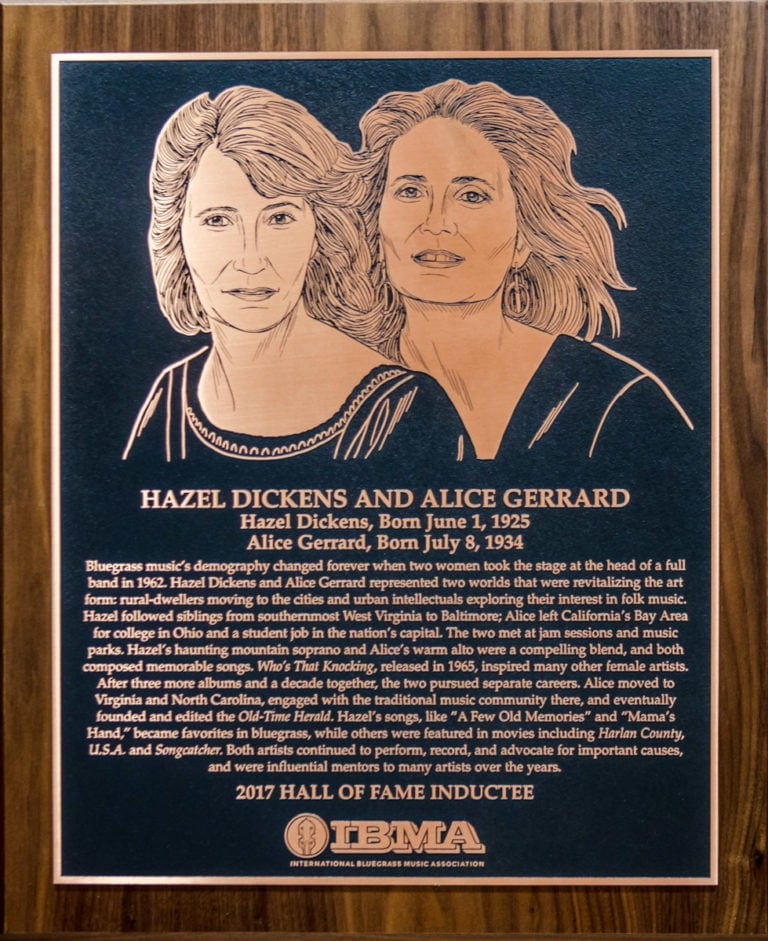
Hazel Dickens will be remembered for her contributions to bluegrass music and her ability to speak honestly about workers and women’s rights through her music. In 1994, Hazel made history when she became the first woman to receive the Merit Award from the International Bluegrass Music Association, and she was given a slew of additional well-deserved awards after that including a National Heritage Fellowship by the National Endowment for the Arts and a special memorial at the Charleston, West Virginia, Cultural Center. Hazel Dickens brought attention to miners and Appalachia through her genuine and personal songs that continue to resonate today as the legacy of her work marches onward.
The songs don’t stop there. In a year where there is so much noise, let’s take a moment to focus on the music made by Appalachian women throughout the decades.
- Bessie Smith Raised in Chattanooga TN, she rose to fame in the 1920s and 1930s and came to be known as the “Empress of the Blues.”
- Dolly Parton: Born in Sevier County, Tennessee, her music is deeply rooted in the storytelling traditions of the Appalachian Mountains.
- Dori Freeman: From Galax, VA, a modern singer-songwriter from Virginia whose work explores Appalachian identity.
- Elaine Purkey was a legend of labor songs from Lincoln County, WV.
- Hazel Dickens (1935–2011): A bluegrass singer and activist from Montcalm, WV, she is known for her songwriting about labor and women’s rights in coal mining communities.
- Jean Ritchie (1922–2015): Known as the “Mother of Folk,” she brought dulcimer playing and traditional Kentucky ballads from her upbringing in Viper, KY to a wider audience.
- Lily May Ledford (1917–1985): From Powell County, KY, she led the all-female string band the Coon Creek Girls, pioneering women in country music.
- Local Honeys! Hailing from Pinckard and Little Sinkin, Kentucky, this modern-day duo draws inspiration from the musical traditions of their home state.
- Loretta Lynn (1932–2022): From Butcher Hollow, KY, she was a “Coal Miner’s Daughter” who brought the raw experience of Eastern Kentucky to mainstream country. Contemporary and Notable Musicians
- Nina Simone (1933-2003) This highly celebrated singer, songwriter, pianist, and civil rights activist blended jazz, blues, folk, gospel, and classical musical styles in a way that was uniquely her own. The “High Priestess of Soul” traces her roots to Tryon, North Carolina.
- Ola Belle Reed (1916–2002): A singer, songwriter, and banjo player from Lansing, NC, who became a legendary figure in bluegrass and folk.
- Patty Loveless: Pikeville, KY-native bluegrass singer.
- Rhiannon Giddens: From Greensboro, NC, a singer and multi-instrumentalist who often explores the African American roots of Appalachian music.
- Roberta Flack A Grammy-winning singer and pianist from Black Mountain, North Carolina who was known for blending R&B, folk, jazz, and pop
- The Judds: Naomi and Wynonna Judd, country duo with roots in Ashland, KY.
- The Carter Family: From Maces Spring, VA, Sarah and Maybelle Carter established foundational vocal and instrumental styles for country music.
- Sierra Ferrell: A Charleston, West Virginia-native bringing a unique, genre-bending sound to the roots scene.
- Valerie June: A multi-instrumentalist blending folk, blues, and Appalachian soul from Jackson, TN.
We have updated the Women’s History Month Playlist with new suggestions of female Appalachian musicians from all of you! We hope you can take some time to enjoy your favorites and find some new ones too.