With the Bipartisan Infrastructure Law of 2021 (BIL) and the Inflation Reduction Act of 2022 (IRA), the Congress and the Biden Administration passed a historic package of infrastructure and climate legislation. Federal investments from this package are already at work in Appalachia; however, the election of Donald Trump resulted in a swath of cancellations of projects that support emission cutting technologies along with programs that  promote environmental justice efforts. Instead, the new administration put its weight behind fossil fuel energy sources, especially coal. 

In this chapter, we will highlight federal programs, along with state programs and philanthropic initiatives, that support the redevelopment of shuttered coal power plants to sustainable manufacturing hubs that benefit the communities, the workers, and the environment. Not all programs that originated under the BIL and IRA have been cut, and many of them are currently litigated in the courts. Finding and accessing these sources is not easy and can be overwhelming. Our goal is to assist with that. If a federal program has not been repealed but has been frozen, we will try to address that via disclaimers to the best of our knowledge.
1. Different Types of Federal Funding – An Overview

The federal government as well as state governments provide tax credits, loan and loan guarantee programs, as well as grant programs for local governments, economic development entities, developers and other stakeholders to apply for. Each funding type has its advantages and disadvantages to consider, and more often than not, applying for any type of federal financial assistance is an involved process. For instance, many (but not all) tax credits are noncompetitive, but filing all needed documents on time and correctly can be complicated. Working with a tax expert is advisable. Grants for community planning and those for program implementation are often competitive, meaning not everybody gets the funding they apply for. Many grants also require a match, that is, communities need to contribute their own money (percentage of the match varies) to receive the grant. Public financing support through low-interest, long term loans and loan guarantees is provided on a case-by-case basis and can be tailored to projects, but will make up only a part of the financing for developers coming to your coal plant site.

Watch: Federal Funding Driving Manufacturing and Economic Development in Energy Communities Webinar

NEW FEDERAL FUNDING SOURCES FOR REDEVELOPMENT PROJECTS

The last few years brought the passage of important federal legislation, such as the American Rescue Plan Act (ARPA), the Bipartisan Infrastructure Law (BIL), the Inflation Reduction Act (IRA), and the CHIPS and Science Act. The goal of the legislation is to improve our infrastructure, invest in clean energy, support small businesses and strengthen our manufacturing sector and national security. The BIL and the IRA (which has been partly repealed in 2025 by the One Big Beautiful Bill Act (OBBBA)) especially offer incentives for the redevelopment of retired coal power plants and their communities.

The Bipartisan Infrastructure Law

The Bipartisan Infrastructure Law (find the legislation here) funds hundreds of programs to build a modern and resilient infrastructure. Among other things the funding streams will be modernizing the power grid, expanding broadband services, building an improved and more climate-friendly transportation system, and tackling the clean up of legacy pollution in our communities.

The Inflation Reduction Act

The Inflation Reduction Act (find the legislation here) makes the single largest investment ever in a new clean energy economy including tax credits and funding for clean energy, clean vehicles, clean buildings, and clean manufacturing. Funding streams can go to a host of applicants, from families who can use tax provisions to make their homes more energy efficient, to local governments, to private investors turning a shuttered coal plant into a solar farm. The IRA was partly repealed in 2025 by the One Big Beautiful Bill Act (find legislation here) .

Source: Blue Green Alliance, “Investments in Energy Communities”

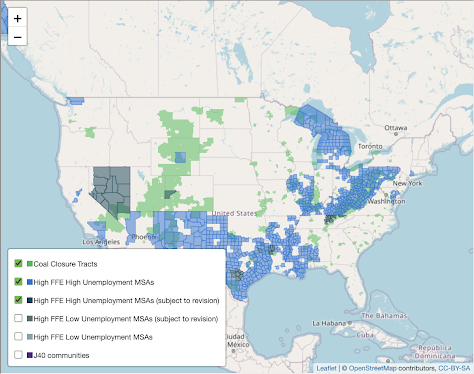
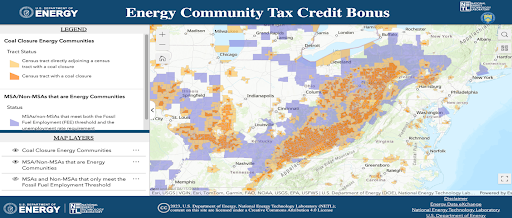
These new laws provide additional funding in several important programs for projects done in so-called “energy communities.” “Energy community” is a technical term created by the federal government with detailed definitions given in the BIL and IRA. Broadly speaking, “energy communities” have been dependent on fossil fuel industries and suffer or have suffered economic loss as the new energy economy emerges.

Since “energy communities” are given extra funding under the new legislation,  Appalachian communities have an unprecedented opportunity to use those funds to create good jobs while transitioning to a more sustainable, prosperous and equitable economy.

It is important to note that the definition of an “energy community” differs depending on the funding opportunity. For definitions of “energy community” check the Blue-Green Alliance website, connected in the map.

The Internal Revenue Service also provides information on how areas may qualify as an “energy community”, depending on different federal funding programs.

DEFINITIONS OF DISADVANTAGED COMMUNITIES

Next to “energy communities,” the BIL and IRA also aim to support disadvantaged communities with special grant programs and additional clean energy tax credits. Again, the specific term and definition of a disadvantaged community varies from program to program which, frankly, adds another level of complexity when navigating potential funding opportunities.

2. Funding Trackers

Search Engines for Federal Loans, Grants and Other Financial Assistance

With the enactment of the BIL and the IRA, the federal government, along with many other organizations, developed federal funding trackers to help prospective applicants find suitable funding programs. With the repeal and cutback of many of those programs, federal funding trackers went away as well. One tracker we have recommended in the past and that is still live today, is hosted by the Sabin Center for Climate Change Law at Columbia University along with the Environmental Defense Fund. The Inflation Reduction Act Tracker now records steps taken by federal agencies to implement, or rollback implementation of, the climate change-related provisions of the 2022 Inflation Reduction Act (IRA).

3. Redevelopment Programs

Programs for Coal Plant Redevelopment

Disclaimer: All tax credit information given on this website is a mere introduction into a complex issue; the intent is to help communities decide which path to pursue in regard to tax credits. This information does not replace expert advice from a professional tax/financial planner or the Internal Revenue Service (IRS).

TAX CREDITS

Tax Credits offset the tax bill for developers and businesses. In so doing, they reduce the overall cost of development and make a project easier to finance and move forward. The Inflation Reduction Act (IRA) enacted several clean energy tax credits; here, we introduce four tax credits developers and businesses will look to as they work on shuttered coal plant sites:

THE INVESTMENT TAX CREDIT

The Investment Tax Credit (ITC) (§ 48 and 48E of the tax code) provides a technology-neutral tax credit for investments in energy projects with net-zero carbon emissions. The ITC is for the owner of the clean energy asset. It provides a one-time tax credit on the investment of an energy-related asset during the tax year. As an example, the taxpayer invests in a solar project upfront and claims the tax credit on the investment when filing for their taxes. The ITC can increase its value by five times (from 6% to 30% of the cost of the project) when the project meets prevailing wage and registered apprenticeship requirements. A Tax Credit Bonus of 10 percentage points (assuming wage and apprenticeship requirements are satisfied) is added on to the ITC for projects located in designated energy communities as defined by the government. A separate bonus, also worth up to 10 percentage points, can be earned by using specified levels of domestic material and manufactured components.

Changes to the ITC under the OBBBA:
The ITC (§48E) terminates for solar and wind facilities placed in service after Dec. 31, 2027, unless construction begins within 12 months of the bill being signed into law (i.e., by July 4, 2026). Facilities that begin construction prior to July 4, 2026, generally have four years to be placed in service. New FEOC (foreign entity of concern) restrictions started on January 1, 2026. Nuclear communities now also qualify for a tax credit bonus.

THE PRODUCTION TAX CREDIT

The Production Tax Credit (PTC) (§ 45 and 45Y of the tax code) provides a technology neutral tax credit for a 10-year period for the electricity produced from net-zero carbon emission energy sources. The PTC is for the owner of the clean energy asset. An asset owner  may claim either the ITC or the PTC for a project, but not both types of credits. Deciding which tax credit is more beneficial needs to be done on a case-by-case basis. Generally speaking, an ITC makes more sense for smaller projects, while a PTC is more beneficial for larger projects. The PTC can increase their value by five times, from $6 per MWh to $30 MWh for 2024 credits, when the project meets prevailing wage and registered apprenticeship requirements. An individual project collects the credit for each MWh of energy produced and sold for 10 years. A Tax Credit Bonus of 10 percent (assuming wage and apprenticeship requirements are satisfied) is added on to the PTC value for projects located in designated energy communities as defined by the government. A separate bonus, also worth up to 10 percent, can be earned by using specified levels of domestic material and manufactured components.

Changes to the PTC under the OBBBA:
The PTC (§45Y) terminates for solar and wind facilities placed in service after Dec. 31, 2027, unless construction begins within 12 months of the bill being signed into law (i.e., by July 4, 2026). Facilities that begin construction prior to July 4, 2026, generally have four years to be placed in service. New FEOC (foreign entity of concern) restrictions started on January 1, 2026. Nuclear communities now also qualify for a tax credit bonus. 

IWG - Production Tax Credit for Electricity from Renewables

ADVANCED MANUFACTURING PRODUCTION TAX CREDIT

Advanced Manufacturing Production Tax Credit – (§ 45X of the tax code)  – The 45X Advanced Manufacturing Production Tax Credit applies to manufacturers of clean energy components such as Photovoltaic components, batteries and certain critical minerals. It is a per-unit tax credit for each clean energy component domestically produced and sold by a manufacturer. It is claimed on federal corporate income taxes. There is no special consideration of energy communities. 

Changes to the 45X Tax Credits under the OBBBA:
The Advanced Manufacturing Production Credit terminates for wind energy components sold after Dec. 31, 2027. The credit terminates for the sale of integrated components starting in 2027. New FEOC (foreign entity of concern) restrictions started on January 1, 2026. The tax credit phase out for critical minerals, which was formerly permanent, begins in 2031.The Advanced Manufacturing Production Credit creates a new tax credit for metallurgical coal.

THE QUALIFYING ADVANCED ENERGY PROJECT CREDIT

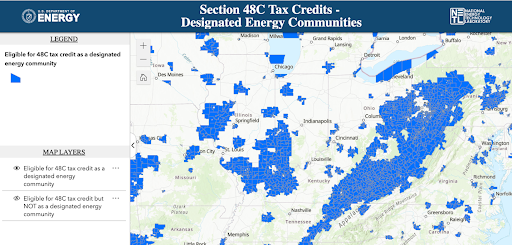
The Qualifying Advanced Energy Project Credit (§ 48C of the tax code) program aims to advance clean energy manufacturing and recycling projects, and to help reduce greenhouse gas emissions. The Inflation Reduction Act provided $10 billion in new funding under the 48C tax credit, with at least $4 billion reserved for projects in designated energy communities. Projects selected under this tax credit span across large, medium, and small businesses and state and local governments. 

Changes to the 48C Tax Credit under the OBBBA:
Forfeited credits are no longer reissued: Projects that fail to meet certification requirements (within 2 years after allocation) and placed into service requirements (within 2 years after certification) will need to return related allocated amounts to the Treasury. The DOE allocated its $10 billion; no further funds have been budgeted for the program under the OBBBA.

MISCELLANEOUS TAX CREDITS FOR CLEAN TECH AND CLEAN ENERGY

For a comprehensive list of IRA clean energy tax credits and deductions, along with their status after the OBBBA enactment, check this IRS website of “Credits and Deductions under the Inflation Reduction Act of 2022.”

IRS.gov - Credits and Deductions Under the Inflation Reduction Act of 2022

ELECTIVE PAY (DIRECT PAY) OPTION FOR INFLATION REDUCTION ACT TAX CREDITS:

For several IRA tax credits (see list here), state and local governments as well as other tax-exempt entities can now access tax incentives directly (i.e., without the need to contract with a for-profit asset owner) under a provision called Elective or Direct Pay. Direct pay allows tax-exempt entities to receive cash payments from the federal government for the value of the tax credits claimed.

For more information on Direct Pay, the Clean Energy Tax Navigator is an excellent tool created by the nonprofit Lawyers for Good Government that helps you figure out eligibility and requirements for Direct Pay regarding your specific project.

LOAN PROGRAMS

Federal (and state) loan and loan guarantee programs are another option for financing the redevelopment of a shuttered coal power plant, especially when private loans are difficult to receive. On the federal level, the Department of Energy’s Loan Program Office (LPO) is a public lender offering debt financing for energy and manufacturing projects. The LPO works with the private sector to provide a “bridge to bankability,” that is, they help finance clean energy projects at scale to demonstrate that these projects can be commercially deployable in the United States.

State and local governments, port authorities, economic development districts and other quasi-pubic development entities may offer low-cost capital support for redevelopment of retired coal plant sites.

DEPARTMENT OF ENERGY –  Loan Program Office (LPO)

Under the Biden Administration, the LPO established its Title 17 Clean Energy Financing Program, which had access to tens of billions of dollars in financing support that could have helped the redevelopment of shuttered coal power plants in Appalachia and beyond. The goal of the program was to accelerate the deployment of clean energy and decarbonization projects resulting in reduced greenhouse gas emissions and decreased air pollution. With the enactment of the OBBBA, the LPO established the Energy Dominance Financing (EDF) program as a replacement for the Title 17 program. While the EDF program mostly favors the financing of fossil fuel friendly projects, it also allows for the financing of projects such as the redevelopment of retired power plants into facilities that process critical minerals and materials, as well as into new manufacturing sites for energy products and services. It remains to be seen if projects financed by the new EDF program further economic development in Appalachia that sustain its communities, workers, and land.

Additional Resource: “Federal Support Opportunities to Remediate and Redevelop Energy Assets” Report

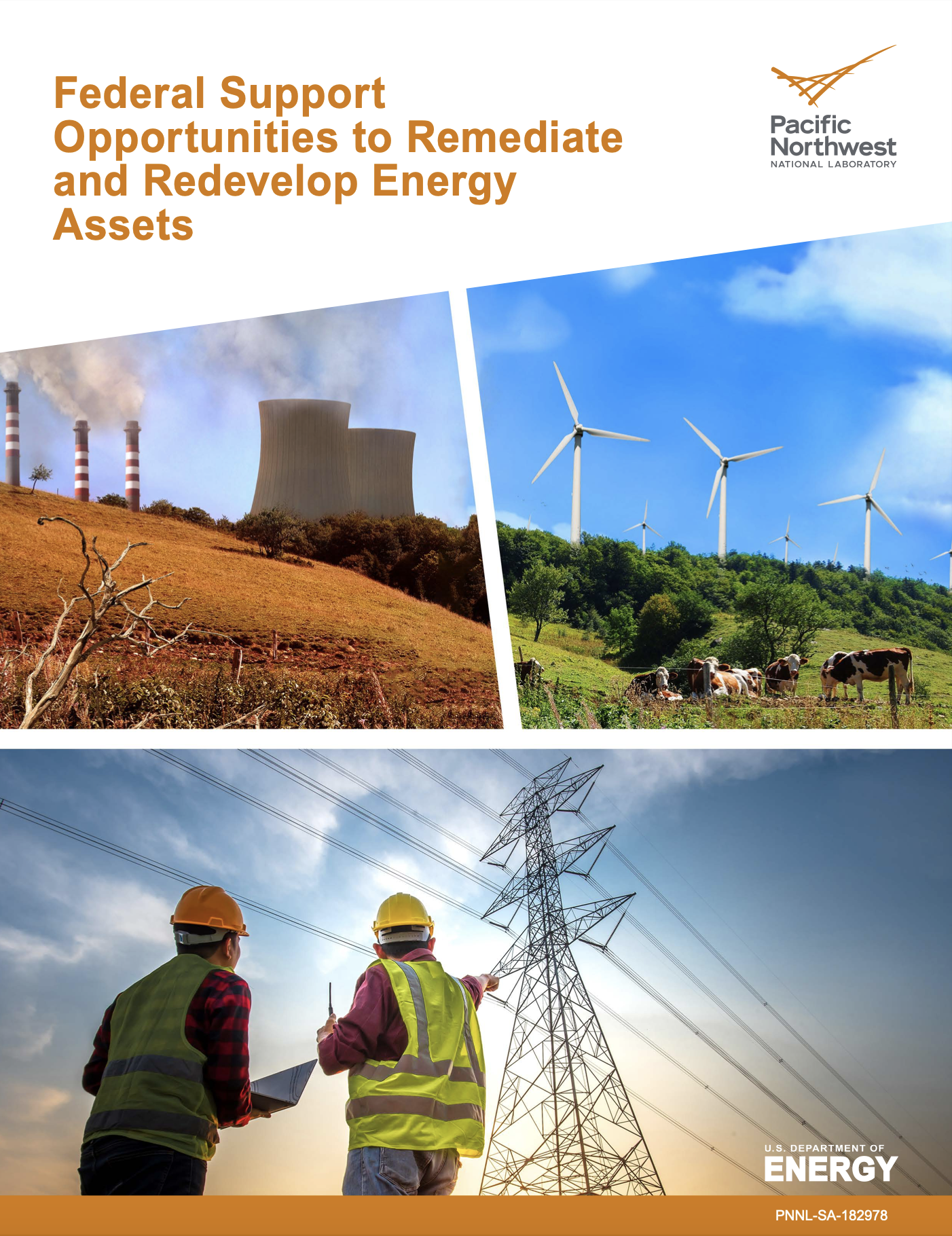
In 2023, the Pacific Northwest National Laboratory published a report “Federal Support Opportunities to Remediate and Redevelop Energy Assets” which outlines how the Department of Energy’s Loan Program Office Title 17 Clean Energy Financing Program can be coordinated with IRA tax credits and federal brownfield grants to help redevelop or repurpose energy infrastructure. 

Note that the replacement of the LPO’s Title 17 Clean Energy Financing Program with the LPO’s Energy Dominance program, as well as the partial repeal of IRA clean energy tax credits render some of the report’s recommendations outdated.

USDA ELECTRIC INFRASTRUCTURE LOAN & LOAN GUARANTEE PROGRAM

The US Department of Agriculture’s Electric Infrastructure Loan and Loan Guarantee Program supports nonprofit and cooperative associations, public bodies, and other utilities with insured loans and loan guarantees in rural communities (check eligibility requirements). The electric loan program has been expanded and now finances the construction of electric distribution, transmission, and generation facilities. It can also be used to finance energy efficiency and renewable energy systems. Rural Development’s Electric Infrastructure Loan Programs provide financing support through loans and loan-guarantees “for the maintenance and improvement of electric infrastructure in areas where commercial capital is not available.”

PROGRAM AWARDEES

In 2023 USDA invested in four Ohio projects that helped to expand and modernize the electric grid and to enhance grid security for nearly 149,000 rural Ohioans. Among other things, the loan supported rural electric cooperatives by financing the installation and upgrade of smart grid technologies increasing economic opportunity and quality of life in 36 Ohio counties. You can find more information about the program here.

GRANT PROGRAMS

Grants (and cooperative agreements) give federal money for public or community purposes. The Inflation Reduction Act (IRA) and particularly the Bipartisan Infrastructure Law (BIL) fund a host of different grant programs, from transportation and infrastructure projects to projects addressing pollution and environmental justice. Many of those grants are competitive and applicants need to closely follow application requirements as well as reporting (and other)  requirements once a grant is awarded. Also, check the application windows and deadlines for the grant programs since many grants accept applications only once a year. Finally, grants often don’t fund the entire cost of the project but require a cost share from the applicants in order to receive the grant. In some cases, a cost share is not required or might be waived; always closely check the application requirements before you apply.

DEPARTMENT OF ENERGY’S ENERGY IMPROVEMENTS IN RURAL AND REMOTE AREAS

The Energy Improvements in Rural or Remote Areas (ERA) program aims “to improve the resilience, reliability, and affordability of energy systems in communities across the country with 10,000 or fewer people.” Through the ERA program, communities can receive financial investment, technical assistance, and other resources to advance community-driven projects that apply new energy systems and deliver measurable benefits to customers. Eligible projects include:

  • Overall cost-effectiveness of energy generation, transmission, or distribution systems;
  • Siting or upgrading transmission and distribution lines;
  • Reducing greenhouse gas emissions from energy generation by rural or remote areas;
  • Providing or modernizing electric generation facilities;
  • Developing microgrids; and
  • Increasing energy efficiency.

The Bipartisan Infrastructure Law provides $1 billion in funding for the ERA program; it offers three funding opportunities with the intent to support community-driven new energy projects of various sizes. Two funding opportunities provide support for small community-driven projects (between $100K and $5 million per project), and the third funding opportunity supports projects that benefit one or more communities (17 projects for award negotiations have been selected for $366 million in funding).

For more information regarding the program, please check here

FEDERAL PROGRAMS WITH EXHAUSTED FUNDING

The Bipartisan Infrastructure Law (BIL) and Inflation Reduction Act (IRA) created several programs that specifically support investments in communities with retired energy assets such as a shuttered coal power plant. However, funding for those programs is limited and funds have been fully spent already due to popular demand. We still introduce those programs here since the appropriation of future funding is always a possibility.

DOE's Advanced Energy Manufacturing and Recycling Grant Program

The Department of Energy’s $750 million Advanced Energy Manufacturing and Recycling Grant Program  was specifically designed for manufacturing projects located in communities where coal mines or coal power plants have been closed. The Program provided grant funding to small- and medium-sized manufacturers enabling them “to build new or retrofit existing manufacturing and industrial facilities. These facilities will produce or recycle advanced energy products or contribute to emission reductions within the manufacturing sector.”

DOE's Capacity Building for Repurposing Energy Assets

The Capacity Building for Repurposing Energy Assets Program is a competitive award that supports communities with significant retired or retiring energy assets, such as a coal-fired power plant, in capacity building and workforce development planning. With the award, communities have access to a staffer whose primary responsibility is to coordinate and plan the sustainable redevelopment of the community’s energy asset. Thus, this grant assists communities to put down a plan and make connections to get the actual redevelopment process started. The application window for the Capacity Building for Repurposing Energy Assets Program is currently closed; you can learn more about the program here

During the last round of funding, four Central Appalachian projects (out of eight) received a $100,000 award each. One of them went to the Beaver County Corporation for Economic Development in early 2024 to help develop the multi-hundred-acre Shippingport Industrial Park (the former Bruce Mansfield Power Plant site). You can learn more about the award and the Shippingport Industrial Park here

PROGRAM AWARDEES

During the last round of funding, four Central Appalachian projects (out of eight) received a $100,000 award each. One of them went to the Beaver County Corporation for Economic Development in early 2024 to help develop the multi-hundred-acre Shippingport Industrial Park (the former Bruce Mansfield Power Plant site). You can learn more about the award and the Shippingport Industrial Park here.

4. Brownfields

Brownfield Remediation

The EPA defines brownfield sites as “a property where expansion, redevelopment or reuse may be complicated by the presence or potential presence of a hazardous substance, pollutant or contaminant” (CERCLA § 101(39)). Due to contamination associated with coal-fired power plants, shuttered plant sites are often considered a brownfield. The EPA’s Brownfield Program offers various funding options as well as technical assistance that support the assessment and clean-up of a brownfield site. Eligible entities of such funds are typically public entities or non-profit organizations. Entities that are liable for the contamination at the site (e.g. original plant owners) are not eligible for brownfield grants. 

EPA BROWNFIELD FINANCIAL ASSISTANCE

  • Assessment Grants assist with brownfield inventories, planning, environmental assessments and community outreach. Assessment grants are generally geared towards communities and other local government entities. These grants are appropriate for communities that are beginning to address their brownfield challenges, as well as for communities that have ongoing efforts to bring sites into productive reuse. Applicants may request up to $500,000 to assess sites contaminated by hazardous substances, pollutants, contaminants, or petroleum. The performance period is up to 4 years. A $2 million community-wide assessment is only available to states, federally recognized Tribal Nations and eligible native corporations in Alaska for up to 5 years.
  • Clean-Up Grants fund the clean-up of a brownfield. Applicants must own the brownfield site to be eligible. Performance period is up to 4 years. Applicants may request up to $500,000, up to $2 million or up to $5 million to address one or more brownfield sites contaminated by hazardous substances, pollutants, contaminants or petroleum.
  • Multipurpose Grants address brownfield assessment, brownfield clean up, and/or the revitalization of the brownfield site/s. When clean-up is part of the project, the applicant must be the site/s owner. The target area may not include communities in distinctly different geographic areas. Applicants can apply for up to $1 million and should demonstrate how grant funds will result in at least one of the following: Phase II environmental site assessment, site cleanup, overall revitalization that includes a feasible reuse plan for one site, eligibility determinations for site-specific assessment and cleanup activities will be made after award and throughout the project period. Grant recipients may be required to provide a $40,000 match in the form of a contribution of money, labor, materials or services for eligible costs. 
  • Revolving Loan Fund (RLF) This program provides funding for a grant recipient to capitalize a revolving loan fund and to provide loans and subgrants to carry out cleanup activities at brownfield sites. When loans are repaid, the loan amount is returned to the fund and re-lent to other borrowers, providing an ongoing source of capital within a community.
  • Job Training Grants allow nonprofits, local governments and other organizations to recruit and train unemployed and underemployed residents in areas affected by the presence of brownfield sites to secure full-time, sustainable employment in various aspects of hazardous and solid waste management and within the larger environmental field.

EPA REGIONAL BROWNFIELD OFFICES

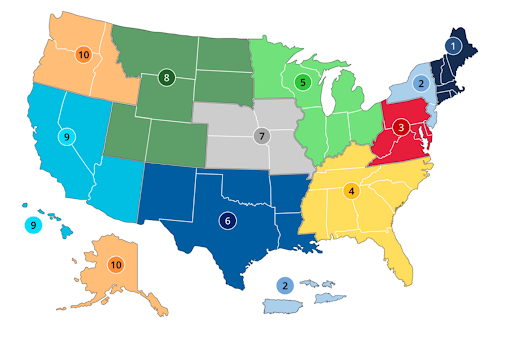
The EPA has 10 regional offices each housing a Brownfield Programs representative who can provide Brownfield stakeholders with guidance regarding applicable laws and regulations, cleanup and redevelopment efforts and technical assistance. Along with contact information, each EPA region has a webpage with region-specific brownfield information.

PA & WV – https://www.epa.gov/brownfields/r3
KY – https://www.epa.gov/brownfields/r4
OH – https://www.epa.gov/brownfields/r5
Pennsylvania (Region 3)West Virginia (Region 3)Kentucky (Region 4)Ohio (Region 5)

EPA BROWNFIELD TECHNICAL ASSISTANCE

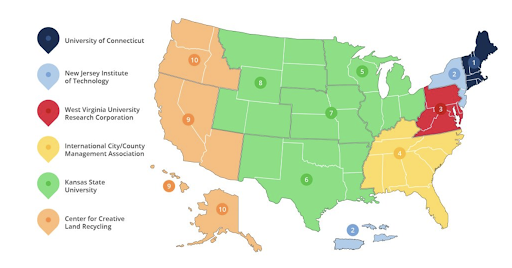
The EPA offers several types of free technical assistance helping communities in their effort to remediate a brownfield site. One of the biggest programs is the Technical Assistance to Brownfields Communities (TAB) Program. The program funds regionally based expert organizations helping communities understand how to address various brownfield related issues such as:

  • preparation of brownfield grant applications 
  • perform a site inventory
  • review historical information
  • design site investigations, sampling and field analysis
  • plan cleanup and redevelopment

EPA regions and their TAB providers:

Links to each region’s TAB provider and further information about the Technical Assistance to Brownfield Communities (TAB) Program can be found here

STATE PROGRAMS FOR BROWNFIELDS

Besides the federal EPA, environmental state agencies have their own brownfield programs offering various types of assistance to local communities.

5. Community Programs

Programs Supporting Community And Small Business Development

The retirement of a coal-fired power plant does not only affect the site and its employees, it impacts the entire community. Therefore, we included a host of federal and regional financing resources that help support community revitalization efforts and  community clean energy projects with strong workforce development components. For programs more specific to the redevelopment of a shuttered coal plant site, please check 3. Redevelopment Programs.

Grants awarded under the EPA Greenhouse Gas Reduction Fund are currently frozen and litigated in the courts.

EPA’S GREENHOUSE GAS REDUCTION FUND

The Greenhouse Gas Reduction Fund (GGRF) is a $27 billion federal investment that will support clean energy projects “to reduce greenhouse gas emissions; reduce other air pollutants; deliver benefits to communities; meet the requirement that it may not have otherwise been financed; mobilize private capital; and support only commercial technologies.”  It includes the following  program categories:

NATIONAL CLEAN INVESTMENT FUND

The National Clean Investment Fund (NCIF) – EPA selected three awardees to help finance clean technology projects in community development and small business, housing, and expanded green banking. The focus is on  low-income and disadvantaged communities. These nationwide institutions can play an important role in community and regional development that should accompany the redevelopment of a shuttered coal plant site.

Coalition for Green Capital

The Coalition for Green Capital which received $5 billion, has particular emphasis on raising funds for and creating green banks and lending programs. It will be participating in public-private investing in clean technology projects and will leverage the existing and growing national network of green banks as a key distribution channel for investment—with at least 50% of investments in low-income and disadvantaged communities. This program may offer the best support for coal site redevelopment.

Coalition for Green Capital

Climate United Fund

This new nonprofit has almost $7 billion to invest in harder-to-reach market segments like consumers, small businesses, small farms, community facilities, and schools—with at least 60% of its investments in low-income and disadvantaged communities, 20% in rural communities, and 10% in Tribal communities. It was formed by Calvert Impact and two Community Development Financial Institutions (CDFIs), Self-Help Ventures Fund and Community Preservation Corporation.

Climate United Fund

Power Forward Communities

This nonprofit coalition’s $2 billion is focused on the household decisions that can be influenced to reduce carbon emissions. Partners include including Enterprise Community Partners, LISC (Local Initiatives Support Corporation), Rewiring America, Habitat for Humanity, and United Way—will lead a national financing program providing customized and affordable solutions for single-family and multi-family housing owners and developers—with at least 75% of investments in low-income and disadvantaged communities.

Power Forward Communities

Coalition for Green Capital

The Coalition for Green Capital which received $5 billion, has particular emphasis on raising funds for and creating green banks and lending programs. It will be participating in public-private investing in clean technology projects and will leverage the existing and growing national network of green banks as a key distribution channel for investment—with at least 50% of investments in low-income and disadvantaged communities. This program may offer the best support for coal site redevelopment.

Coalition for Green Capital

Climate United Fund

This new nonprofit has almost $7 billion to invest in harder-to-reach market segments like consumers, small businesses, small farms, community facilities, and schools—with at least 60% of its investments in low-income and disadvantaged communities, 20% in rural communities, and 10% in Tribal communities. It was formed by Calvert Impact and two Community Development Financial Institutions (CDFIs), Self-Help Ventures Fund and Community Preservation Corporation.

Climate United Fund

Power Forward Communities

This nonprofit coalition’s $2 billion is focused on the household decisions that can be influenced to reduce carbon emissions. Partners include including Enterprise Community Partners, LISC (Local Initiatives Support Corporation), Rewiring America, Habitat for Humanity, and United Way—will lead a national financing program providing customized and affordable solutions for single-family and multi-family housing owners and developers—with at least 75% of investments in low-income and disadvantaged communities.

Power Forward Communities

CLEAN COMMUNITIES INVESTMENT ACCELORATOR

The Clean Communities Investment Accelerator (CCIA) – EPA funds five financing hubs to provide funding and technical assistance to community lenders working in low-income and disadvantaged communities. The goal is to establish a network of local community lenders to build the financing capacity for clean technology projects in underserved communities.  Examples of participating community lenders are “community development financial institutions, credit unions, green banks, housing finance agencies, minority depository institutions, and many others” Note that 100 percent of the capital under the CCIA will go to low-income and disadvantaged communities.

Appalachian Community Capital

Appalachian Community Capital is using $500 million in federal EPA funds to launch the Green Bank for Rural America, which will deliver clean capital and capacity building assistance to hundreds of community lenders working in coal, energy, underserved rural, and Tribal communities across the United States.

Appalachian Community Capital

Opportunity Finance Network

Opportunity Finance Network will use its almost $3 billion funding to enhance capital and capacity building for a national network of 400+ community lenders—predominantly U.S. Treasury-certified Community Development Financial Institution (CDFI) Loan Funds—which serve all 50 states, the District of Columbia, and several U.S. territories.

Opportunity Finance Network

Inclusiv

Inclusiv ($1.87 billion award) is a Community Development Financial Institution (CDFI) lender that provides capital and capacity building for a national network of credit unions—which include CDFIs, and financial cooperatives in Puerto Rico—that collectively manage $330 billion in assets and serve 23 million individuals across the country.

Inclusiv

Justice Climate Fund

Justice Climate FundJCF network of community lenders will use the $940 million from the federal EPA to fund smaller-scale renewable energy, clean transportation, and energy-efficient homes and buildings, resulting in reduced pollution, improved climate resilience and better lives.

Justice Climate Fund

Native CDFI Network

Native CDFI Network  This Community Development Financial Institution (CDFI) will use its $400 million USEPA fund to strengthen CDFIs creating access to capital and resources for Native peoples.

Native CDFI Network

SOLAR FOR ALL

Solar for All – This program provides funding directly to the states for energy efficiency and housing initiatives.  It is a great engine for the creation of thousands of living wage jobs in construction trades.  This $7 billion fund will support 60 organizations that will create new or expand existing low-income solar programs, which will enable over 900,000 households in low-income and disadvantaged communities to benefit from distributed solar energy.

Grants awarded under the EPA Environmental and Climate Justice Community Change Grant are currently frozen with some of them being litigated in the courts.

EPA’s ENVIRONMENTAL AND CLIMATE JUSTICE COMMUNITY CHANGE GRANT

Community Change Grants program benefits disadvantaged communities through projects that reduce pollution, increase community climate resilience, and build community capacity to address environmental and climate justice challenges. The objective of the grant is to fund community-driven, changemaking projects that center collaborative efforts around healthier, safer, and more prosperous communities. Grants under the program are not designed to help redevelop industrial facilities such as a shuttered coal plant site. But, Community Change Grants are designed to strengthen disadvantaged communities such as coal communities, and can be a catalyst for community development and job creation. 

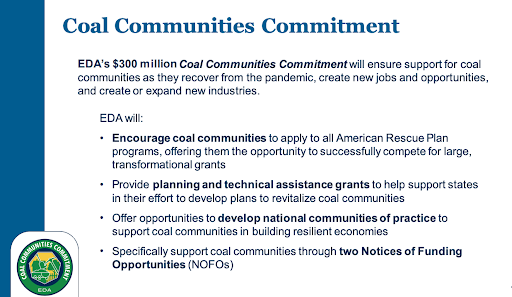
ECONOMIC DEVELOPMENT ADMINISTRATION’S ASSISTANCE TO COAL COMMUNITIES (ACC) PROGRAM

The EDA’s Public Works and Economic Adjustment Assistance Program (which includes Assistance to Coal Communities) intends to stimulate economic growth in distressed communities by leveraging existing regional assets and supporting the implementation of economic development strategies. The program assists applicants by providing investments that support planning, construction of infrastructure, technical assistance, and revolving loan fund projects. 

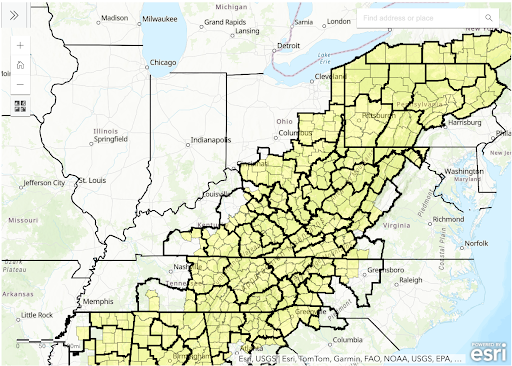
Communities and regions that can reasonably demonstrate how changes in the coal economy have resulted or are anticipated to result in job losses and layoffs in any coal-reliant commercial sector. This includes, but is not limited to coal mining, coal-fired power plants, related transportation, logistics, and/or supply chain manufacturing industries. There is no pre-defined list of impacted coal communities.

To demonstrate eligibility, complete applications must provide appropriate third party economic and demographic statistics that document the extent to which contractions in the coal economy have negatively impacted the community or region.

For more information regarding the program, please check here.

STATE ECONOMIC DEVELOPMENT PROGRAMS

States can be critical partners in the redevelopment of retired coal power plants, as well as in community and business development. 

6. Appalachian Regional Commission (ARC)

The Appalachian Regional Commission is an economic development partnership between the federal government and 13 state governments  counties. Its focus is on building strong communities and fostering economic growth to help the region achieve socio-economic parity with the nation.

APPALACHIAN REGIONAL COMMISSION LOCAL DEVELOPMENT DISTRICTS

Local Development Districts (LDDs) are multi-county planning organizations that connect communities to facilitate regionally driven economic development. LDDs support local partnerships and connect stakeholders to possible funding sources and expertise that can help with redevelopment efforts in their region.

Each state has a state plan for counties that are part of the Appalachian Regional Commission.

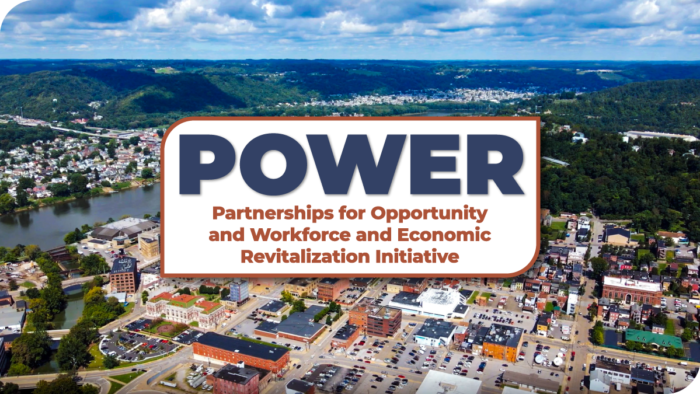
With the Partnerships for Opportunity and Workforce and Economic Revitalization (POWER) Initiative, the Appalachian Regional Commission (ARC) provides funding for coal communities and regions that experienced job losses based on America’s changing energy economy. Since 2015, ARC has supported over 500 projects with over $400 millions in funding to create and retain jobs, train workers and students, and leverage additional private investments to help revitalize coal communities

For more information about the POWER Initiative, please check here

READY APPALACHIA INITIATIVE

The Appalachian Regional Commission’s READY Initiative offers up to nine weeks of virtual no-cost training, cohort-based learning and funding (no match required) for leaders of nonprofits, community foundations, local governments, and Local Development Districts (LDDs). There are four different programs under the READY Initiative, each track tailored to the participating entities (nonprofits, community foundations, local governments, or LDD). Potential participants need to apply for this program which is a combination of training and grant money. Check the website for application deadlines and to see which program is currently open. 

READY Local Government

  • READY Local Government trains local government officials to better identify, secure, manage, and implement federally funded projects. After completing the training program, participants can receive up to $50,000 in funding (no match required) to implement internal capacity-building projects to help them better serve communities. Eligible participants under the READY Local Government can come from any borough, city, county, municipality, parish, town, township, or federally-recognized Indian tribe in the Appalachian Region. Municipalities that serve a distressed county and census tract are strongly encouraged to participate.
You can find more information about READY Local Governments here

READY Local Development District (LDD)

  • READY Local Development District (LDD) is offering up to $100,000 to Appalachian Local Development Districts to hire staff and more effectively help clients, including local governments and nonprofits, access and manage federal funding. So far, the program has awarded nearly $4 million supporting 41 Local Development Districts in Appalachia. 
You can find more information about READY Local Development District here

READY Non-Profit

READY Non-Profit helps leaders of Appalachian nonprofits build skills in federal grant application and management, financial management, fundraising, employee recruitment and retention, marketing, and operations. After completing the training program, participants can apply for up to $25,000 in funding (no match required) to implement internal capacity building projects that will help them better serve Appalachian communities. Nonprofits focused on communities  that are in a distressed county and census tract are strongly encouraged to participate:

You can find more information about READY Non Profits here

READY Community Foundation

  • READY Community Foundation offers a six week no-cost virtual training that helps participating organizations to strengthen their operations, programming and fundraising. After completing the training program, participants can apply for up to $25,000 in funding (no-match required) to implement internal capacity-building projects and bolster their organizations as critical local funding sources. Community Foundations that serve a distressed county and census tract are strongly encouraged to participate:
You can find more information about READY Community Foundations here

7. Technical Assistance

Technical Assistance Resources

The  federal government offers various funding opportunities that help us move the United States toward a new clean energy future, towards cleaner and modern infrastructure, and toward better supply chains and national security through a revitalized manufacturing sector. This is all very exciting, but finding the right funding program and making it through the application process can be intimidating and overwhelming. Technical Assistance provided by federal and state agencies, by universities, foundations and many others offer assistance from locating suitable funding opportunities to grant management.

FEDERAL TECHNICAL ASSISTANCE GUIDES

Some federal and state agencies offer free technical assistance, such as the EPA’s Brownfield Program. Other technical assistance requires an application to be accessed. If successful, eligible applicants will then receive funding for technical assistance that can be used for grant writing and/or managing the implementation of an already received grant.

EPA TECHNICAL ASSISTANCE PROGRAMS

The federal EPA offers various funds for technical assistance under its Environmental Justice Climate Programs, its Brownfield Program, and its WaterTA Program.

Download the Fact Sheet

Note that not all TCTACs are currently active.

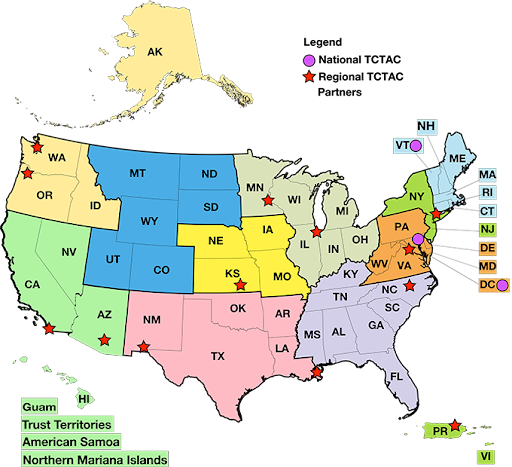
Environmental Justice Thriving Communities Technical Assistance Centers (TCTACs)

The EPA has selected 16 Environmental Justice Thriving Communities Technical Assistance Centers (EJ TCTACs) in partnership with the U.S. Department of Energy to help underserved and overburdened communities across the country. Throughout the U.S. there are three national technical assistance centers and thirteen technical assistance centers for each EPA region. The centers provide training and other assistance to build capacity for navigating federal grant application systems, writing strong grant proposals, and effectively managing grant funding. For further information regarding the EJ TCTACs Program check here

Note that some of the technical assistance programs listed here are impacted by changes in federal funding.

OTHER SOURCES OF TECHNICAL ASSISTANCE

JUST TRANSITION FUND

Just Transition Fund (JTF) is a national philanthropic initiative supporting the economic transition of mining and power plant communities in major coal-affected areas of the United States. In 2022, JTF launched the Federal Access Center, a one-stop resource hub that helps coal communities secure public funding for local economic solutions. The Center supports community organizations seeking federal grants to advance projects related to economic and workforce development, economic diversification, and broadband access and affordability. You can learn more about the Federal Access Center here.

To support a project in your community, JTF offers two types of programs based on the project stage. Stakeholders that are still working to define and develop an economic development project and need more support before applying for federal funding should check the Coal Communities Get Ready! Challenge program. Stakeholders that are ready to apply for federal funding should check the Application Ready program.

Coal Communities Get Ready! Challenge

Under the “Coal Communities Get Ready! Challenge” Program, the Center selects a cohort of 8-10 organizations to build readiness to apply for federal grants. The program offers a limited number of grants and technical assistance for early-stage planning projects that have a long-term goal of leveraging federal funding. It is designed for organizations that have little to no experience applying for federal funds. Each awardee will receive one-year grants of $150,000 and customized technical assistance that will together help build readiness to apply for and manage federal funding. The application window is currently closed but interested organizations should check the Just Transition Fund’s website for updates.

Just Transition Fund - Get Ready! Challenge

Application Ready

Under its “Application Ready” Program, the Federal Access Center offers direct grants of up to $100,000 to support a range of costs associated with developing applications, including hiring a grant writer or other experts, organizing community partnerships, and meeting matching funds requirements. The Center also provides technical assistance from the JTF’s team of experts to help organizations identify funding programs, understand application requirements, build relationships with agency contacts, and see proposals through the final submission stage. They also share lessons learned back with agencies about barriers for communities applying to federal funds. The “Application Ready” Program is currently accepting applications.

Just Transition Fund - Application Ready

U.S. Conference of Mayors and the Local Infrastructure Hub – Local Government Bootcamps

The U.S. Conference of Mayors and the Local Infrastructure Hub offers events such as webinars and learning sessions, as well as bootcamps to help small to mid-sized municipalities take advantage of the grant opportunities available through the Bipartisan Infrastructure Law and the Inflation Reduction Act. 

The list of those no-cost bootcamp changes. For the Fall 2024, the Local Infrastructure Hub offers bootcamps regarding:

  • IRA Elective Pay (aka Direct Pay): Elective or Direct Pay allows tax-exempt entities to claim a tax credit (in form of a payout from the IRS) for several clean energy tax credits under the Inflation Reduction Act.  <<Anchor to a section in Chapter 6; Rike will provide page numbers>>
  • Rebuilding American Infrastructure with Sustainability and Equity (RAISE) program: The program funds a mix of transportation infrastructure, such as public transportation, passenger or freight rail projects, inland port infrastructure to strengthen communities making them safer and more efficient for drivers, cyclists and pedestrians.
  • Building Resilient Infrastructure and Communities (BRIC): The program funds hazard mitigation projects and aims to shift the focus from reactive disaster spending to proactive investment in community resilience.
  • Flood Mitigation Assistance (FMA) program. The program aims to make local communities more flood resilient through flood mitigation plans and projects that reduce the risk of disaster damage. 

Federal funding programs covered in past bootscamps include Brownfield Grants,  Energy Efficiency and Conservation Block Grant Program, and Charging and Fueling Infrastructure Grants. Towns and cities participating in these programs will receive support to develop a robust federal grant application, including access to templates, example submissions, and other resources that make for a well-composed application. The program provides a range of support, including access to subject matter experts, individualized coaching sessions, office hours, and peer-to-peer learning where they can engage with a community of like-minded applicants aiming for infrastructure progress. 

Participants will include mayors and municipal staff with job functions focused on finance, community engagement, and other relevant disciplines such as administrative and advisory affairs. A major emphasis will also be placed on helping communities understand federal priorities, such as equity and sustainability, and then incorporate these and other desired outcomes into submissions.

By the conclusion of the bootcamp, cities will be prepared to submit robust applications for federal funding opportunities in these programs.

Registration for the above mentioned bootcamps are now open on a first come first served basis.

Click Here For More Information Regarding the Bootcamps

National Association of Counties: Building Resilience in Coal Communities (BRECC)

The BRECC National Network is an open forum and peer network connecting coal community leaders representing local governments, regional organizations, community nonprofits, education and workforce providers, utilities, private business and other local stakeholders. 

Community leaders can join the BRECC Online Community Platform which shares announcements for funding and technical assistance opportunities, resources and relevant reports as well as informational webinars. All BRECC National Network bi-monthly learning sessions will be recorded and saved to this platform. BRECC partners will create posts, providing opportunities for users to reply and ask questions.

To Join The BRECC Online Community Platform, Sign Up Here

REGIONAL TECHNICAL ASSISTANCE AND COMMUNITY BUILDING RESOURCES

Next to the federal technical assistance resources, state agencies and other regional groups also provide valuable technical assistance help. Below is a list of regional organizations offering a host of different services to move forward projects in your community.  

FAIR SHAKE ENVIRONMENTAL LEGAL SERVICES

Fair Shake is a non-profit environmental law firm that offers a range of services from legal counsel to community planning and outreach. Fair Shake’s Community Democracy Program supports environmental justice communities in the Ohio River Valley to harness their strengths and resources to drive what they want for their air, water, and places in ways that support their health, happiness, and wellbeing. At the same time, the program supports local decision-makers, municipalities, and county governments to reimagine how they engage with their constituents in decision-making processes, and to provide tools and support to help reach the community’s vision. 

For more information about Fair Shake’s Community Democracy Program, check here

WEST VIRGINIA COMMUNITY DEVELOPMENT HUB

The West Virginia Community Development Hub is a valuable resource for different West Virginia community leaders who wish to spark positive change in their hometowns and throughout the state. The Hub provides online courses for community organizing, coaching of community leaders, and a platform for West Virginian communities to connect. 

First and foremost, the Hub offers five community coaching programs ranging from introductory to those that require long-term community buy-in and consensus. Amanda Workman Scott, the Hub’s Director of Community Engagement or Stacy Thomas, the Community Coaching Programs Coordinator can help inform which capacity-coaching program is appropriate according to your needs. The Community Coaching Programs, with relevant applications and timelines, are on their website under “How We Work.”

WEST VIRGINIA GRANT RESOURCE CENTERS

The West Virginia Grant Resource Centers, located in Huntington and Morgantown, serve all 55 West Virginia counties with assistance during the pre-award process. The centers help eligible applicants from  identifying funding opportunities to submitting a complete application package every step of the way. Special consideration is given to applicants that are located and serve distressed counties as identified by the Appalachian Regional Commission. 

For more information about the WV Grant Resource Centers check here

SOUTHWESTERN PENNSYLVANIA MUNICIPAL PROJECT HUB

The Southwestern Pennsylvania Municipal Hub (The Hub) is a resource for local government officials in Southwestern PA who are looking for support in realizing their municipal project. The Hub is fairly new and still growing. Already, it provides project and technical support helping to connect municipalities, school districts and nonprofits with funding opportunities, direct technical assistance, and experts such as grant writers, engineers and project managers. The Hub also helps to establish strong community engagement and planning, since it believes to be a prerequisite for a project’s success. Finally, the Hub offers research and resource support identifying the gaps, barriers and bottlenecks the region faces when pursuing a green and equitable economy. The Southwestern Pennsylvania Municipal Hub serves a 10-county region in Southwestern PA, including Allegheny, Armstrong, Beaver, Butler, Fayette, Greene, Indiana, Lawrence, Washington, and Westmoreland Counties. For more information check here.

For more information on Southwestern Pennsylvania Municipal Project Hub check here

POWER A CLEAN FUTURE OHIO

Power a Clean Future Ohio is a nonpartisan coalition that works with Ohio communities to build a clean energy future. The nonprofit equips local leaders with tools and resources to create carbon reduction plans and implement them in ways that are achievable, equitable, and economical.

Communities of the PCFO coalition have access to the group’s Infrastructure Grant Assistance Program (IGAP). IGAP provides technical assistance and other resources as new grant programs and application deadlines are announced. Member communities are assisted at different steps of the way, from helping them to find the right funding opportunity to providing expert advice during the grant writing process.

PCFO also offers an Inflation Reduction Act (IRA) Resource Hub assisting Ohio local governments and community members with the resources they need to take advantage of historic opportunities provided through this landmark legislation.    

Learn more on how to add your Ohio community to the mix and access the resources above by going to the Power a Clean Future Ohio website.

Power a Clean Future Ohio