
February 26, 2026
Clean energy microgrids offer community resilience with a sustainable mindset

Recent storms, including Winter Storm Fern, have again exposed our infrastructure vulnerabilities to extreme weather events, including prolonged blackouts. One solution to these vulnerabilities is microgrids.
Over the last few years, Colorado mountain towns like Silverton have invested in community clean microgrids in response to frequent outages caused by winter weather. In Texas, the state added nearly 100 microgrids after Winter Storm Uri in 2021, and Texas microgrid adoption has grown nearly 20x over the past ten years.
Renewable energy microgrids are a promising solution to a convergence of issues around growing energy demand, aging grid infrastructure, and the increase in year-round extreme weather events gripping the country.
What are microgrids?
Microgrids are a type of power system that can operate independently from the main electrical grid using their own local source of energy generation (typically solar-plus-battery storage). In emergencies, microgrids can continue meeting their users main energy needs, including essential services during disasters. They can also feed power back to the main grid to help it recover from outages.
As a result, microgrids have been a priority investment for communities to mitigate future failures. As an added benefit, by running on low-cost energy such as solar, clean energy microgrids are extremely cost effective in the long run.
Microgrids are also a real opportunity to increase clean energy access in traditionally underserved, rural communities with limited access to reliable and stable energy. A sustained effort to deploy microgrids nationwide could also help drive strong job creation, with estimates forecasting that renewable energy microgrids will create nearly 500,000 new jobs through 2030. Note, these estimates were based on 2021 policies; while current policies are not conducive to this level of growth, the potential for job creation remains. Large technology companies are also investing in microgrid development to more quickly build out the energy load needed to power a growing number of data centers across the country. Read more about responsible data center development in Appalachia here.
Challenges to growing microgrid capacity
Notwithstanding its potential benefits, scaling microgrid development has its share of challenges. The main barrier to widespread microgrid deployment is an underdeveloped regulatory landscape at the federal and state level. Federally, the Trump administration has rolled back Inflation Reduction Act and Infrastructure Investment and Jobs Act funding for clean energy projects, as well as canceled $8 billion in Department of Energy awards that enabled a significant amount of microgrid funding and scaling. It is now up to states to determine how to legislate and regulate microgrids to increase community resilience to extreme weather while also achieving state climate goals. Additional challenges include high upfront costs, as well as financing difficulties depending on the complexity and structure of agreements and the time horizon for permitting and siting.
Microgrids can make Appalachia more sustainable and resilient
Case studies across the country provide helpful frameworks for the Appalachian region’s understanding of how microgrids can play a role in sustainable economic development. In Western North Carolina, following Hurricane Helene, regional and local non-profits partnered together to build and distribute solar-plus-storage microgrids – Appalachian Resilience Hubs – in remote and hard-to-reach areas. In Western Kentucky, a titanium manufacturer teamed up with a renewables company to build one of the largest manufacturing facilities powered by solar-plus-storage microgrid technology. In Montgomery County, Maryland, county officials have leveraged public-private partnerships and the Microgrid-as-a-Service model to power multiple critical services such as public safety, emergency response, and public transportation, using clean energy microgrids that can withstand future blackouts. However, cities may also struggle to deploy microgrids due to utility pushback, as seen in New Orleans, Louisiana.
Microgrids offer a paradigm shift into how we think about resilience and energy access. Read more below to understand the ins and outs of microgrid policy in the U.S. through several case studies and practical resources for considering microgrids in your own community.
Case Study: Appalachian Resilience Hubs
Type: Community Non-Profit & Philanthropy
Location: Central Appalachia, Western North Carolina
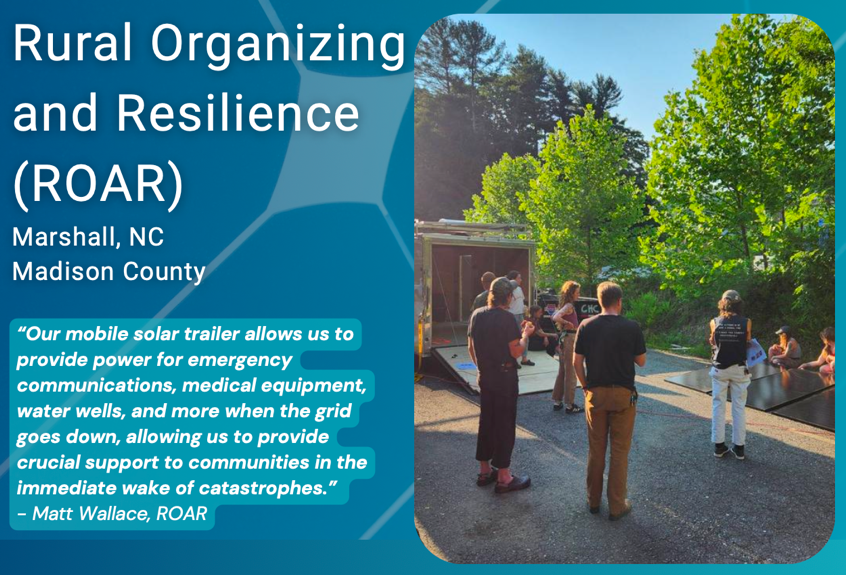
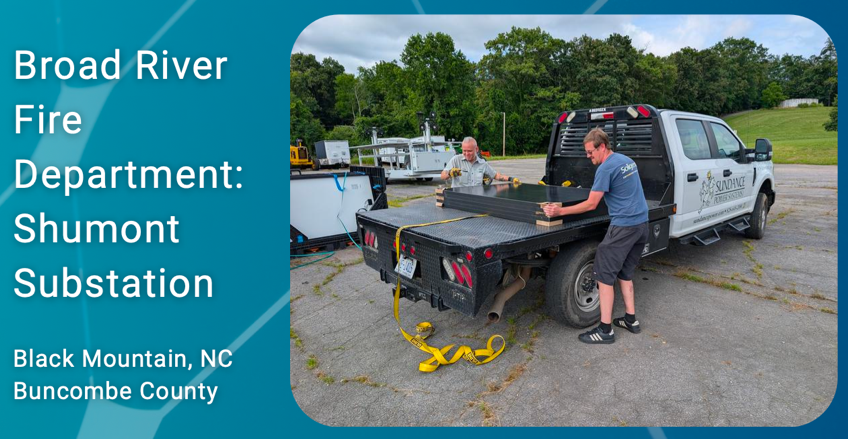

Description: Following Hurricane Helene, communities in Central Appalachia grappled with mounting problems around generations of disinvestment, increasing natural disasters, and aging infrastructure. Regional organizations Invest Appalachia and Appalachian Voices (manager of the Appalachian Solar Finance Fund) collaborated with energy resilience non-profit Footprint Project to build up local resilience and disaster preparedness, while also fostering community and prosperity in Appalachia. The project provided permanent and autonomous microgrids in a regional network of ‘resilience hubs’ in trusted community spaces (churches, fire departments, anchor businesses, schools). Equipped with solar power and battery storage, resilience hubs provide back-up power for critical functions during extreme weather events, as well as provide shelter, food pantries, and youth programs. Outside of disasters, resilience hubs also benefit from reduced utility costs. North Carolina also recently announced a $5 million investment in solar and battery storage microgrids for emergency responders and community-based organizations, in collaboration with the Footprint Project and other regional partners.
Image Source: Examples of Resilience Hub projects (“Resilience Has an Address in WNC” Report)
Case Study: Microgrid-Powered Titanium Manufacturing in West Virginia
Type: Private Sector
Location: Jackson County, West Virginia
Titanium Metals Corporation (Timet) partnered with BHE Renewables to create one of the first microgrid developments using solar-plus-storage technology to directly power a large industrial facility. 70% of the facility’s power will be provided by a microgrid, and the project will house 200,000 American-made solar panels. The project is an opportunity to enable more domestic manufacturing of titanium while keeping costs low and using renewable energy. The solar-plus-battery system can provide the consistent, reliable power supply needed for the titanium melting furnaces at a cost comparable to traditional energy. The project represents over $500 million in total investment, though the project is eligible for Inflation Reduction Act investment tax credits. The lot is a 2,000 acre site, previously home to an aluminum smelter that closed in large part due to high electricity prices. As of November 2025, the project is expected to be complete in 2027.
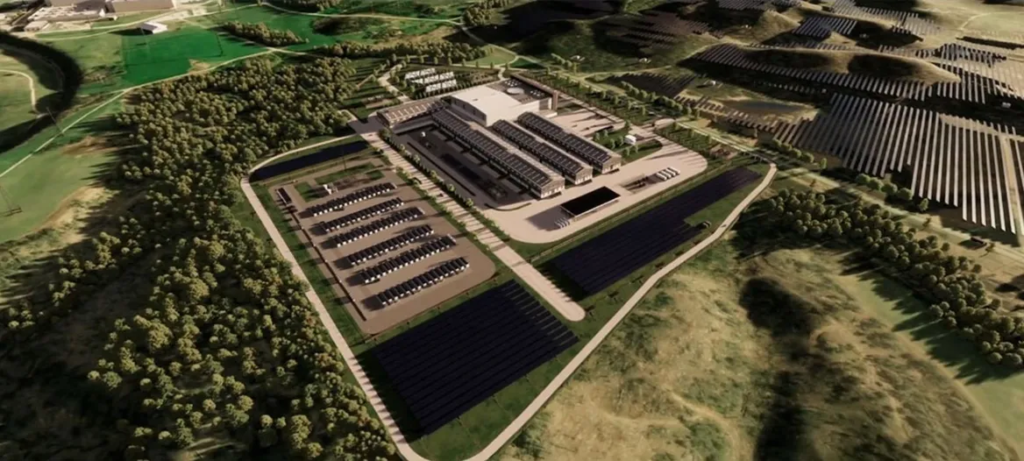
Rendering of solar microgrid and titanium melt facility in Ravenswood, WV. (BHE Renewables/ Timet)
Case Study: Utility Challenges to Resilience Microgrids in New Orleans
Type: Public
Location: New Orleans, Louisiana
In 2015, the City of New Orleans conducted workshops with the DOE to address resilience needs, especially on the heels of Hurricane Ida which crashed the city’s main grid and left thousands without power for weeks. The city decided to invest in solar-plus-storage islanded microgrids in the Gentilly neighborhood to power a group of buildings. Leveraging unused Hurricane Sandy Housing and Urban Development (HUD) funding, the City secured $141 million to fund the project. As of January 2026, however, the microgrids are still not installed due to safety and technical concerns cited by local utility Entergy. Entergy’s main concern is allowing multiple buildings to share power independently and has refused to update their policies. Multiple mayoral administration changes have also led to delays. Now, the city is looking to pivot either to scaled-down microgrids that power single buildings, or instead invest in more electric vehicle chargers. In 2022, the city partnered with the National Renewable Energy Laboratory (NREL) to evaluate a separate set of microgrids and identify solutions to complete the Gentilly microgrids. The city’s deputy chief resilience officer is also working with the City Council to change the city’s interconnection policy to make the original microgrids feasible.
Case Study: Public-Private Investments in County-Wide Microgrids
Model: Public-Private Partnership
Jurisdiction: Montgomery County, Maryland
Montgomery County, Maryland has invested heavily in privately-owned and operated public purpose microgrids for important government functions. A solar and combined heat and power (CHP) microgrid in Gaithersburg, Maryland serves the county’s public safety headquarters, including police, fire and rescue, and emergency functions. The second microgrid serves the county’s correctional facility. Both microgrids are fully operational and were financed together in a single project, motivated by historic widespread outages and aging infrastructure. Both microgrids can function in island mode during grid disruptions, and supply 90-95% of the facilities’ energy needs during normal operations. Schneider Electric is the solutions provider and Duke Energy Renewables is the microgrid owner. Since the county lacked the upfront capital to fund the project, it established a 25-year service life and power purchase agreement with Duke Energy Renewables. The county pays fixed-rate capacity and energy fees comparable to rates previously paid to the local utility, in a business model known as Microgrid-as-a-Service (MaaS). Another active microgrid project in the county is also a public-private partnership with AlphaStruxure, that will build a 6.84 megawatt microgrid with solar arrays, electric bus chargers, battery energy storage, and a County-owned hydrogen electrolyzer to power the county’s bus depot – which aims to be the largest transit depot microgrid in the nation. By 2035, the depot will accommodate 200 zero-emissions buses (mostly hydrogen fuel cell) and the project was expected to be complete by the end of 2025, though its current status is unknown.
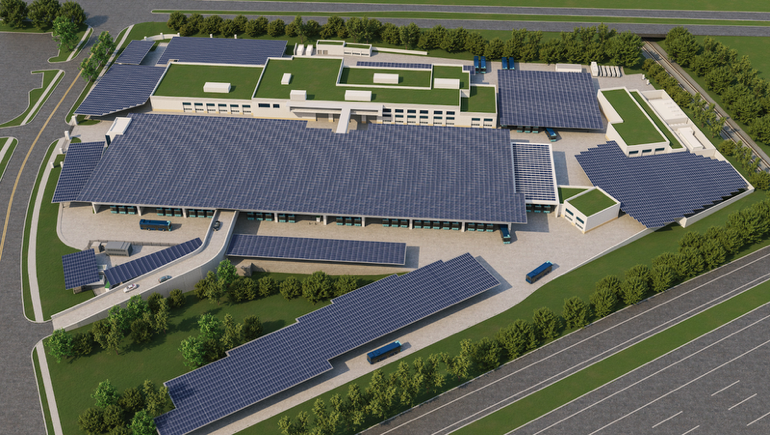
Bus Depot Rendering (AlphaStruxure)
Clean Energy Microgrid Resources
- To learn more about building microgrids in rural or remote areas, review the DOE’s Office of Electricity Community Microgrid Assistance Partnership (C-MAP) website which also includes information on potential federal funding opportunities and/or technical assistance. The program also offers knowledge-sharing and best practices through Community Microgrid Innovation Exchange (C-MIX).
- To learn more about state microgrid policy frameworks, state-level legislative activity, and how to scope a new microgrid project/program/office, check out the National Association of Regulatory Utility Commissioners (NARUC) and National Association of State Energy Officials (NASEO)’s state microgrid policy framework.
- To learn more about various state microgrid deployment efforts, check out Think Microgrid’s annual state scorecard that analyzes each state’s deployment, policy, resilience, grid services, and equity as it relates to the microgrid sector.
To learn more about establishing a community microgrid, check out the Rocky Mountain Institute’s blog post featuring its “Microgrids for Resilient Communities” cohort and lessons learned for how to effectively greenlight community microgrids.