As the saying goes, if you don’t have a seat at the table, you are probably on the menu. How can our communities work together to advocate for federal policy that works for us?
Tracking a Funding Flatline
The federal climate infrastructure package rightfully targeted coal country for investment into a more sustainable, equitable development strategy. The Biden Administration recognized that with the right federal resources, coal country could be transformed into a leader of the new energy economy. However, this also means the region is now being hit hard by the federal climate funding freeze and related cuts to funding.
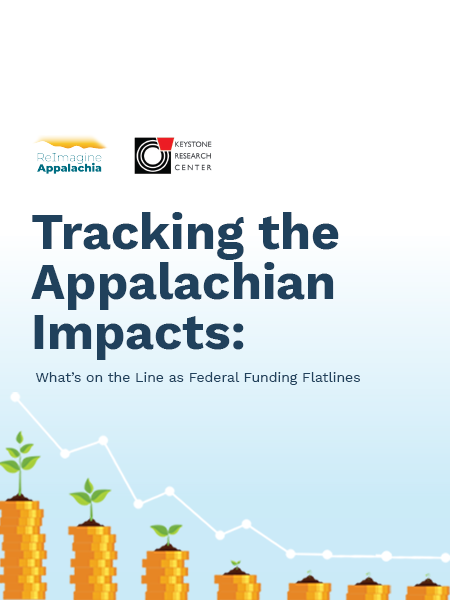
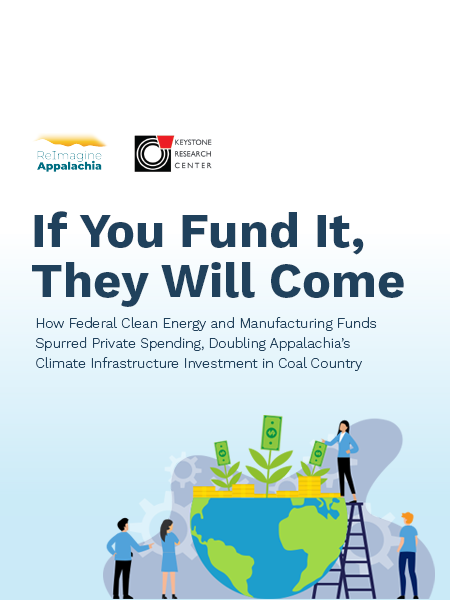
Our Tracking the Appalachian Impacts reports are capturing policy changes and data over time, with a focus on the manufacturing and clean energy sectors, to provide essential information on how these policy changes impact our region’s economy.

Appropriations Requests
Each year, House and Senate members solicit priorities from their constituents to inform their versions of the upcoming year’s federal budget. The Appropriations Committees then take those priorities and create their versions of the budget. The Appropriations process is a months-long effort.
Each year, ReImagine Appalachia works with dozens of partners across to create an annual platform to help advocate for the continued funding of key priorities for the Region, including the Appalachian Regional Commission, Americorps, Flood Resilience, Miner Health and Safety, Mining Reclamation, Workforce Development, Economic Development and support for communities, families and children.
View our FY27 Priorities here.
View our FY26 Priorities here.
Convening in a Time of Uncertainty
In this climate, ReImagine Appalachia’s work to foster community over competition, mutual support instead of a scarcity mindset, and transparency and collaboration over silos is an important antidote to these pressures. Our extensive network plays an important role in connecting civil society in Appalachia – non-profits, local governments, and other partners – which have not just seen an unstable funding landscape and attacks on crucial community programs, but also intimidation and retaliatory actions from the current administration.
One way to get involved in this area of our work is by joining our Coalition Updates: join one of our bi-weekly coalition update calls and receive the emails every other week with resources, regional updates, and policy updates. Register here.
Advocating for Appalachia in the Federal Budget
Another opportunity for Appalachian communities is through the earmarks process. You can learn more about how earmarks, or Congressionally Directed Spending, has supported Appalachian communities through these blogs.
Learn about earmarks, also known as “Congressionally Directed Spending” in the Senate and “Community Project Funding” in the House. Earmarks allow Senators to direct federal funding to address specific community needs. This guide empowers Appalachian communities to explore and potentially benefit from this exciting opportunity. Read here.
This article highlights stories of success that show the transformative potential of earmarks, guided by dedicated local leaders and organizations. Read here.