November 14, 2025

ReImagine Appalachia’s Appalachian Manufacturing Action Plan Summit aimed to explore the opportunities for building on the region’s existing strengths to transform the region into a hub for modernized manufacturing. Throughout the summit, the manufacturing opportunity within the region was affirmed as well as the need to draw down public and private investment in order to take full advantage of the opportunity. Also recognized was the importance of building platforms for collaboration, adopting new technology, and embracing creative strategies like community storytelling and data visualization to realize the vision of a thriving and globally-competitive Appalachian manufacturing sector for the 21st Century.
The feedback gathered from the range of stakeholders present at the summit will be used to inform an updated version of the draft Appalachian Manufacturing Action Plan (A-MAP), a document that outlines the actionable steps needed to support sustainable growth for Appalachian manufacturing. That updated draft will then be re-circulated for those interested and willing to review it.
Below are highlights from throughout the day:
Plenary 1 – Driving a Collective Vision: Transforming Appalachia into a Hub for Sustainable Manufacturing
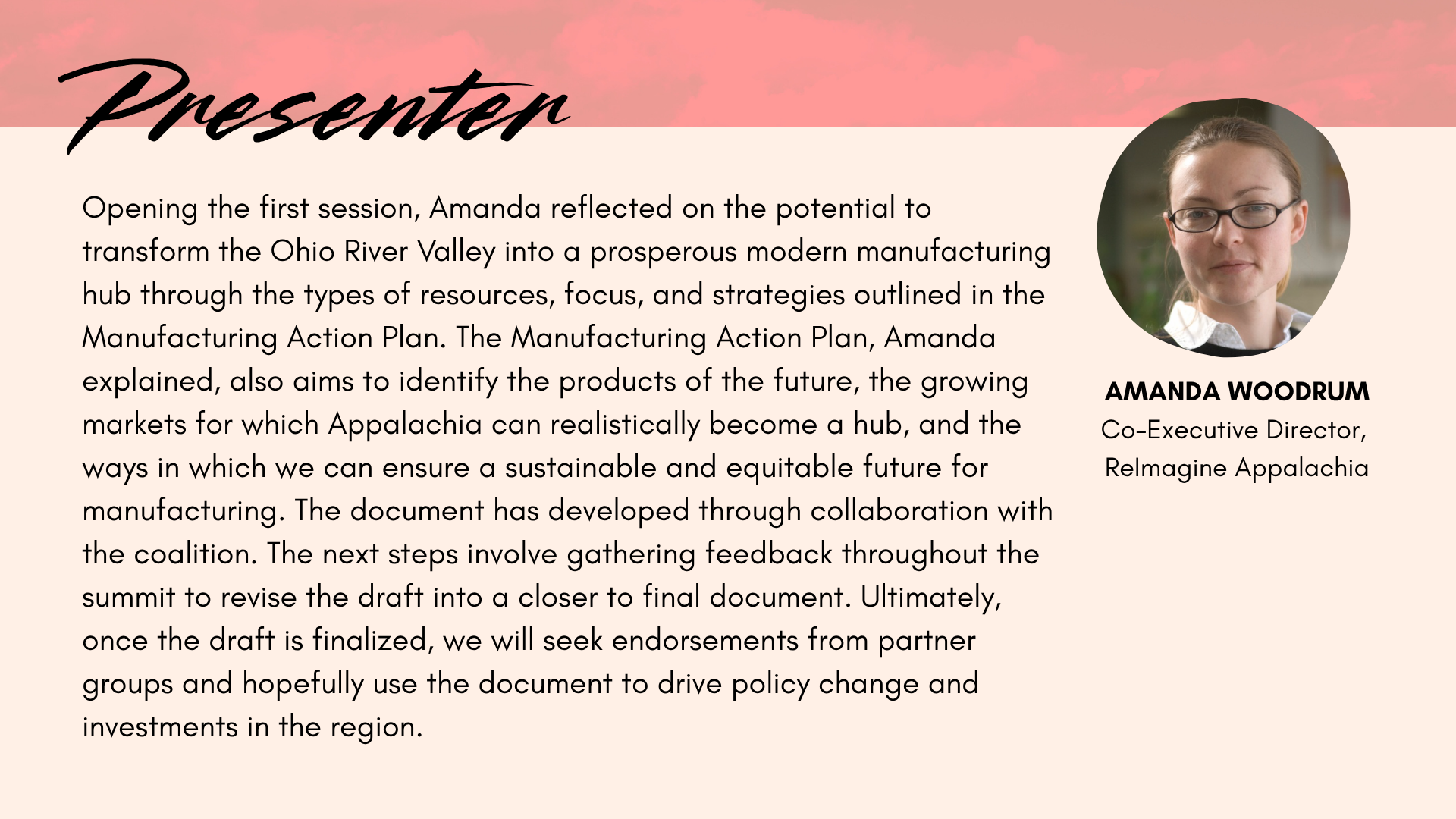
At this opening session focused on Appalachia’s manufacturing potential, ReImagine Appalachia introduced the new Manufacturing Action Plan aimed at accelerating growth in the region’s manufacturing sectors.
Watch the complete first plenary here.
Plenary 1 Presenters and what they discussed
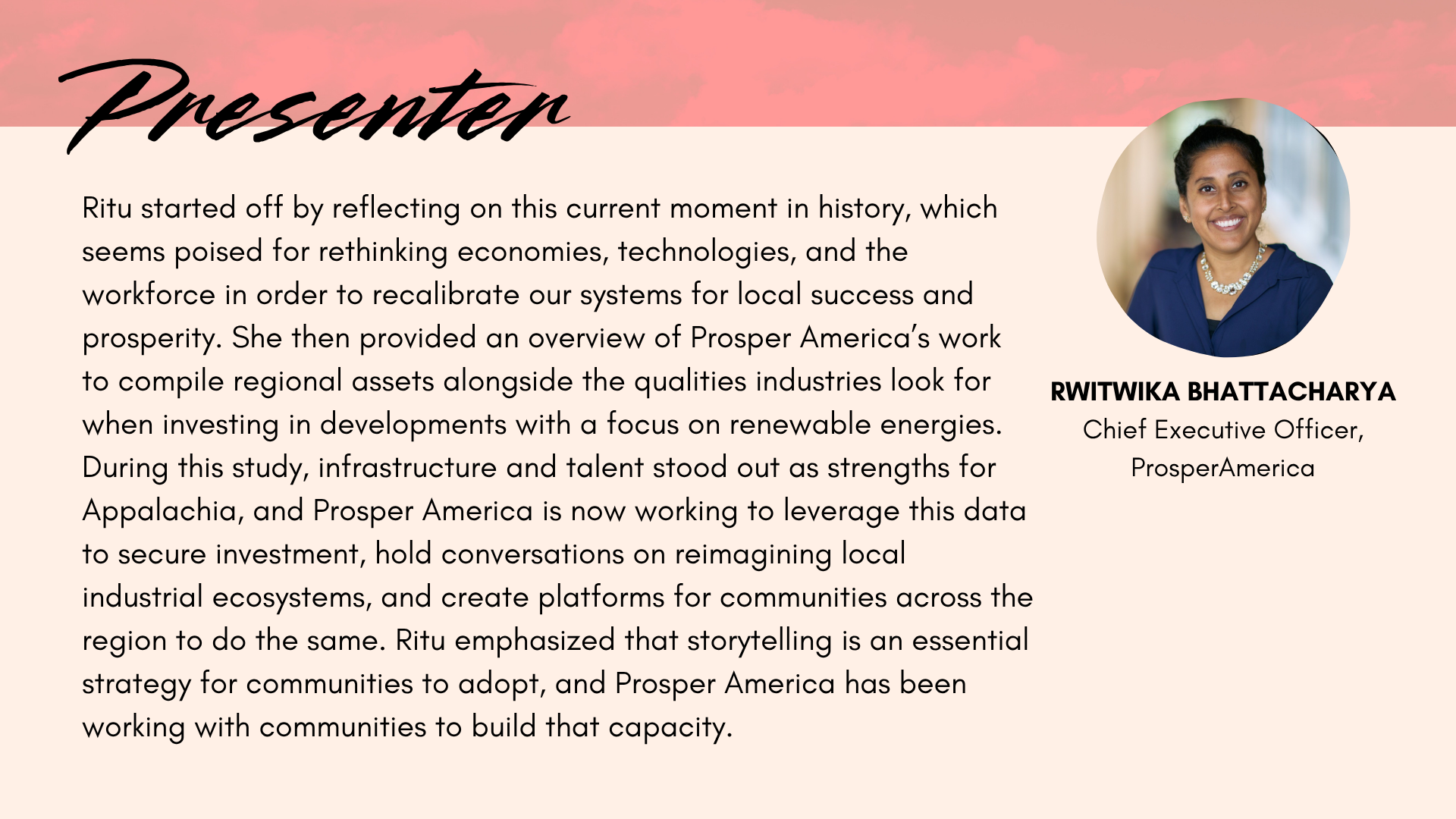
Speakers
- Amanda Woodrum, Co-Executive Director, ReImagine Appalachia
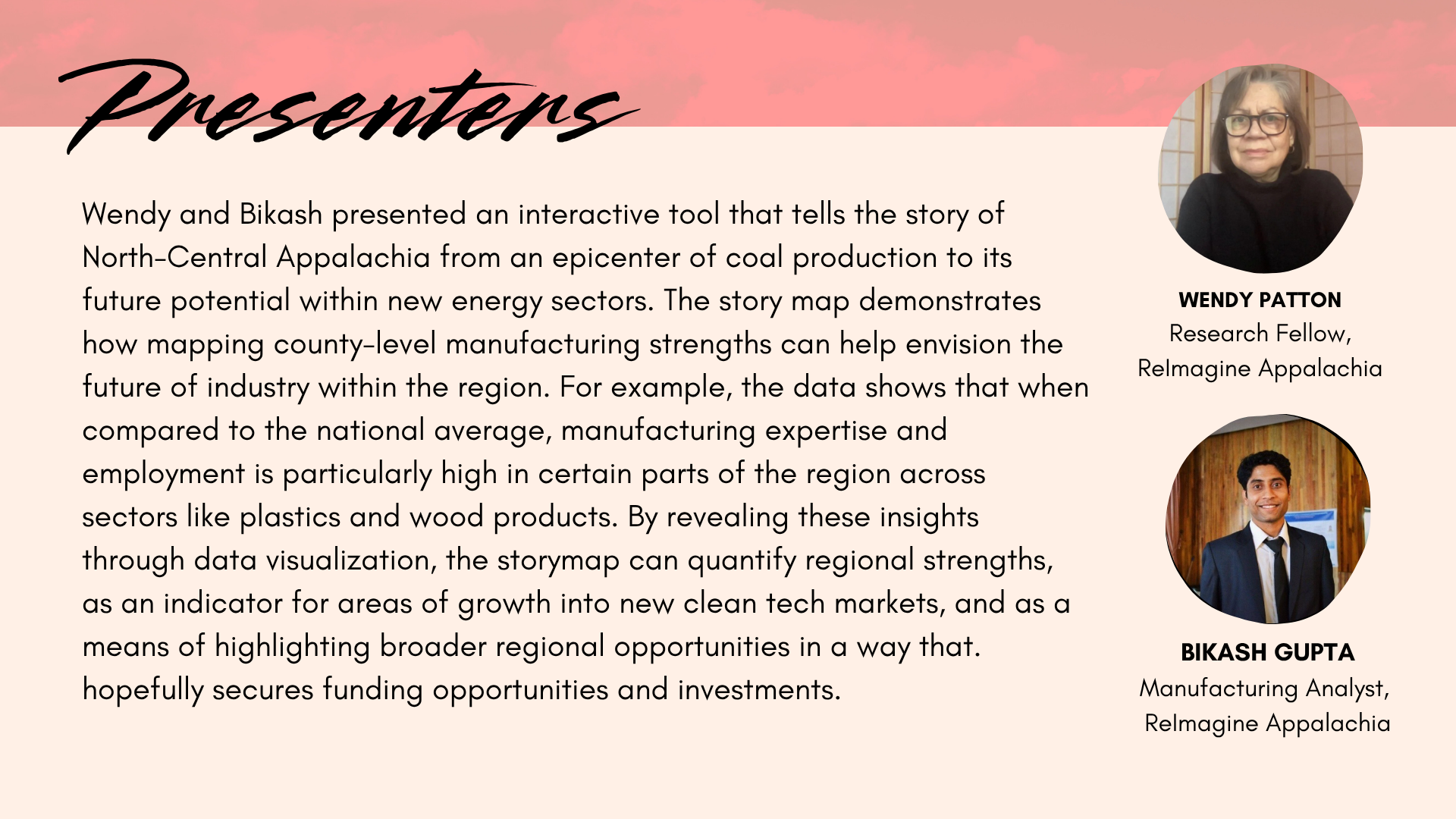
- Wendy Patton, Senior Research Fellow, ReImagine Appalachia
- Bikash Gupta, Sustainable Manufacturing Analyst, ReImagine Appalachia
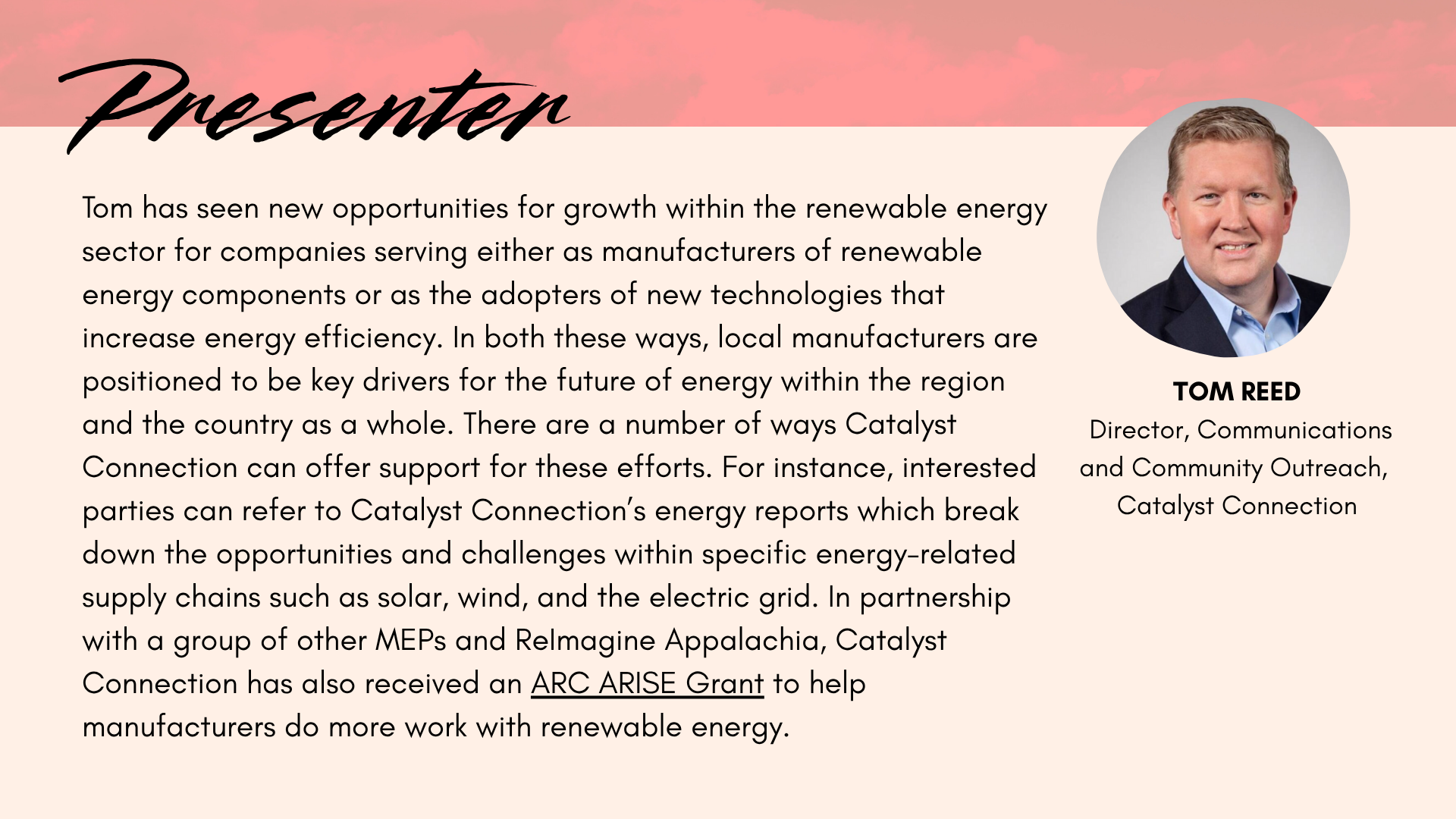
- Tom Reed, Director, Communications and Community Outreach, Catalyst Connection
- Rwitwika Bhattacharya, Chief Executive Officer, ProsperAmerica
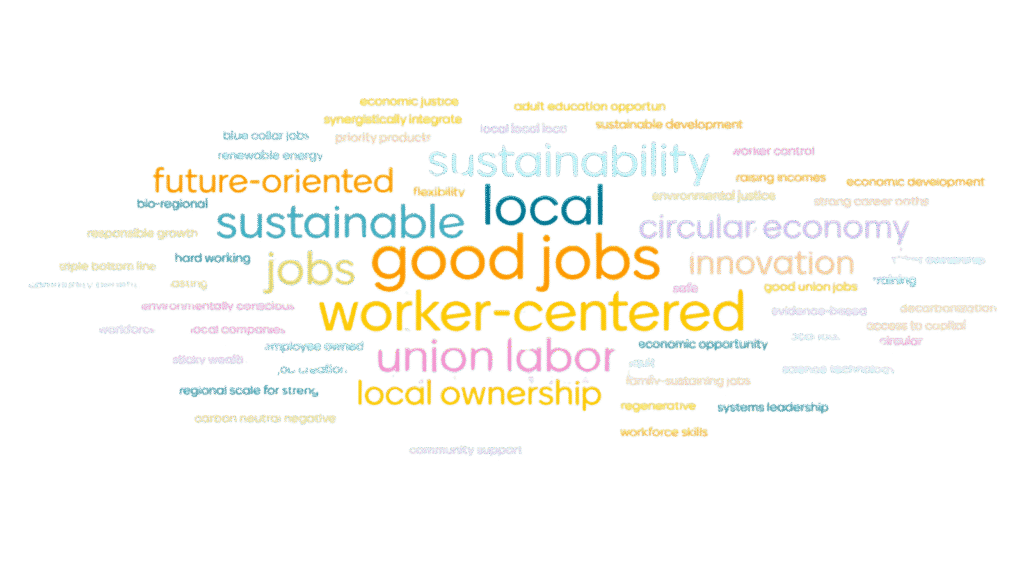
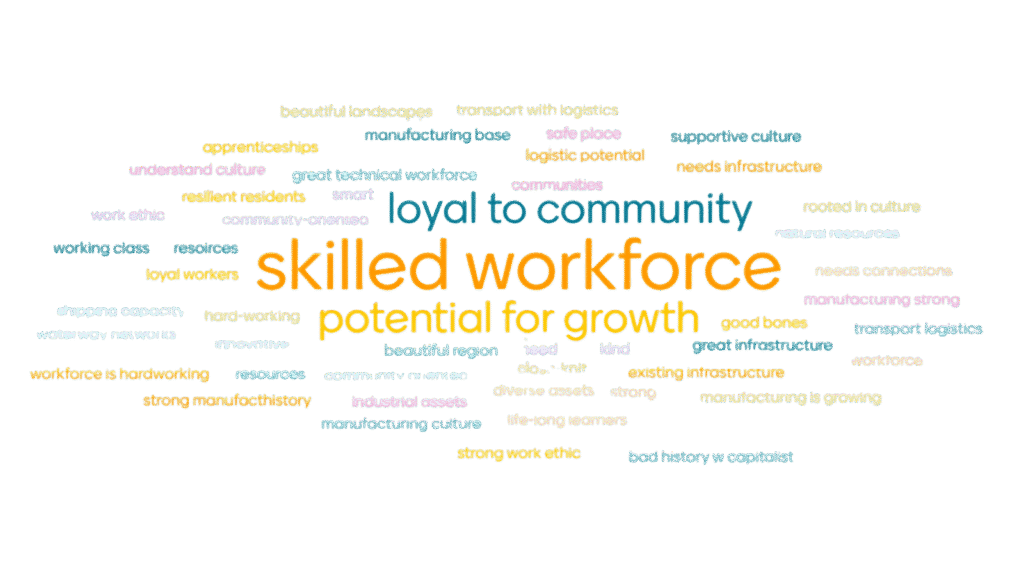
The session began with an audience poll, which collected thoughts about the strengths of the Appalachian manufacturing sector from the range of stakeholder types in attendance. In the word clouds below, note that the larger words indicate that multiple people submitted the same idea, while the smaller words were only inputted once.
What are the most important principles and values to you when it comes to growing manufacturing in Appalachia?
What should investors know about Appalachia?
A group discussion between the panelists followed the opening remarks about what might be next for the region.
- Tom called the audience’s attention to the role manufacturers play in taking new products and technological advances from the research phase and into the reality of production. In order to connect R&D efforts with manufacturers, avenues of communication need to be opened between the two parties, who may otherwise be unaware of each other.
- Wendy took a moment to acknowledge how much great work has been accomplished in North-Central Appalachia over the past decade. Although people may not know it yet, there is energy for regional growth and development is happening now in the form of brownfield site transformations, the expansion of new supply chains, and other projects that prove it is an exciting time for the region.
- Bikash built on Wendy’s excitement emphasizing that Appalachia has many assets in addition to its manufacturing strengths such as multi-modal transportation infrastructure and its central location between key urban markets.
- Ritu added that one of Appalachia’s most exciting advantages is the way that its strengths align with national and global needs. Appalachia has the potential to become a leader in the critical mineral and circular economy, sectors with quickly growing demand. The work all of the panelists are doing to update the narrative about Appalachia and get the word out about the region’s opportunities is an essential step in growing a thriving Appalachian manufacturing sector that brings community prosperity and even national benefits.
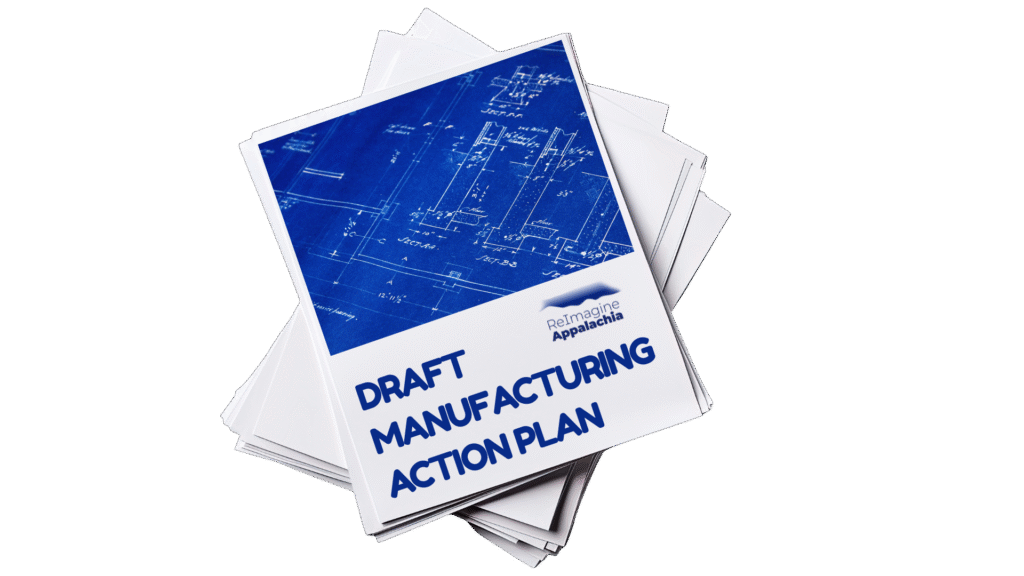
See our draft Manufacturing Action Plan here.
Breakout Session 1
Participants chose to attend one of the following breakout sessions.
1A: Make it in Appalachia: Appalachia’s historic strengths in manufacturing as well as its central location make it uniquely suited to become a manufacturing hub for the country. Participants at this breakout session discussed the sectors ranging from building materials to wind turbine parts that hold promise for the region’s future.
1. The region’s strengths position it well for growth: Participants highlighted Appalachia’s major assets such as its skilled workforce, strong leadership, grid and energy capacity, and proximity to top universities. The region also has transportation and industrial infrastructure that can support future manufacturing and clean energy opportunities.
- 2. Regional collaboration offers a competitive advantage: Speakers emphasized that working across state lines is key to scaling investment and avoiding competition between neighboring counties. A regional approach can help pool resources, derisk investments, and attract international companies by presenting Appalachia as a unified economic area.
- 3. Regulatory and policy alignment is needed to support regional growth: Participants pointed out inconsistencies between states, especially in energy and environmental regulations, that hinder collaboration. They agreed that better coordination, both across state lines and with the federal government, is essential for managing tariffs, permitting, and energy sharing.
- 4. New technologies and AI can strengthen permitting and environmental planning: AI tools from universities like CMU and Pitt could be used to streamline environmental assessments and permitting processes. This would make investment projects more efficient and help co-locate new industries around existing eco-parks and industrial sites.
- 5. Sustainable investment depends on strong partnerships and resources: Speakers discussed the need for long-term partnerships involving industry, universities, unions, philanthropy, and government. They noted that without consistent resources and engagement, partnerships remain fragmented and lose momentum over time.
- 6. Labor and community benefits should be built into development plans: Participants agreed that manufacturing and economic growth must also serve community well-being. Strengthening unions, ensuring corporate accountability, and reinvesting profits into local workforce training, transportation, and childcare were seen as vital for equitable development.
- 7. Federal and state funding gaps require creative local solutions: Several participants expressed concern that promised federal or state funds are delayed or disappearing. They called for stronger corporate responsibility and innovative financing models to fill funding gaps, ensuring that community and economic development projects can move forward despite uncertain government support.
View the full agenda and notes here:
https://docs.google.com/document/d/17ZgPKvwGX75q2dBlemORYJpOJBe3VgClZuXLXrjoFp0/edit?usp=sharing
View the recording here: https://drive.google.com/file/d/1xeKuvJBeKmj1sCEC8dWvr29mCkBUCbEY/view?usp=sharing
2A: Buy it in Appalachia: Appalachia has the capacity to manufacture a wide range of essential products, and the region should be using these locally-produced goods as well! In this breakout session, participants discussed how regional procurement policies can support prosperity in regional manufacturing and generate other cost-saving and sustainability benefits at the same time.
A Buy It In Appalachia campaign will require involvement from a broad group of stakeholders including (but not limited to) MEP’s, anchor institutions, economic development practitioners, manufacturers, and contractors.
- Critical first steps in the campaign include mapping current supply and demand – which will involve aggregating existing datasets, possibly using AI and digital twin technologies – and then projecting trends into the next 10-15 yrs to start investing in local suppliers to meet future demand.
- Creating a multi-state, Appalachian procurement campaign that cuts across multiple sectors requires a “network of networks” approach as stakeholders are generally siloed into smaller geographical areas and focused on individual sectors.
View the full agenda and notes here: https://docs.google.com/document/d/1lftERXxmYtCKko7jKvONJsemfNddDrLTPSDZ79B8wdk/edit?usp=sharing
View the recording here: https://drive.google.com/file/d/1WtXrvZY1COEHBTR4qErvP0cF0hWdB0gu/view?usp=sharing
3A: Grow it in Appalachia: The Appalachian region is well suited to growing a number of high demand bio-based feedstocks that can be used to manufacture the sustainable products of the future. Participants in this session engaged in a conversation around promising crops like industrial hemp and the barriers that must be overcome to unlock the full potential of the bio-based manufacturing sector.
Projects around the world and within the region show how agriculture can be co-located with industrial operations to create circular, sustainable systems that reduce waste.
- There is a lot of potential for wood products and hardwood cross-laminated timber/mass timber presents a particular opportunity for sustainability and economics.
- A cost-barrier and prevalence of soft wood within US construction present challenges.
- Addressing policy barriers, building standards for cross-laminated timber (as well as hemp-based products for that matter), and regional manufacturing capacity are solutions.
- Many groups are segmented by state. Benefits would come from strengthening regional partnerships across states, leverage co-op models, and tap into federal and university resources (USDA, ARC, land grant universities) to fund and scale projects that do not get stuck in the research phase for too long.
- Lack of public education is still a major challenge especially for hemp.
- Awareness gaps impact everything from public approval to policy.
- It really helps to show people examples of the viability, innovation, and sustainability benefits offered by hemp-based products (like the PA HempHub’s demonstration house)
View the full agenda and notes here: https://docs.google.com/document/d/1IJPkuHyTsSp3d9-QoniRkdKF_dxN-dM54_ut4B4IFcw/edit?usp=sharing
View the recording here: https://drive.google.com/file/d/1Q6Nk-M-vo_rej1aqr1pudZSXYsLb4Nct/view?usp=sharing
4A: Reuse It in Appalachia: As Appalachian communities work to redevelop vacant sites like shuttered coal plants or reimagine existing industrial operations, reuse and circular manufacturing will help increase regional sustainability, prosperity, and competitiveness for the future. Participants in this session joined experts from groups already engaging with reuse around the region to discuss how circular manufacturing can be further implemented through projects like waste collection systems, eco-industrial park models, and more.
It is important to emphasize all the benefits that come with reuse and sustainable manufacturing and especially emphasize the benefits for efficiency and profits as part of an attitude and culture shift to the ways we describe this work. Education initiatives that get this message out into financial circles like finance magazines and big firms are needed.
- There is a need to turn to funding outside of federal grants and there are benefits in creating opportunities for large corporations, small companies and startups, and investors to network together and have conversations around moving towards sustainable manufacturing. In this sense co-location can apply for businesses offering too; startups may be able to work with corporations to offer efficiency solutions if they are all located within proximity of each other.
- Business skills education and development of strong business plans (including showing how the numbers can back up funding proposals) perhaps in partnership with business development centers are vital for small businesses alongside technical assistance
- To move away from extractive industries, Appalachia, a region that can offer the infrastructure needed to establish global competitiveness, should make it clear that it wants to attract companies that will apply circular business technologies.
View the full agenda and notes here: https://docs.google.com/document/d/1243BpQdMHcaIkn6OE9MN5eI36OnvxyBEmU3TDhbSBNg/edit?usp=sharing
View the recording here: https://drive.google.com/file/d/1ygiH1BA79__0XSI4k6kdD7n0LHlSCFMo/view?usp=sharing
5A: Work in Appalachia: Time and time again, Appalachia’s skilled workforce has been identified as one of its greatest strengths. In this breakout session, participants discussed how to ensure that Appalachian workers receive the fair compensation they deserve in new manufacturing jobs.
Good apprenticeship programs in manufacturing (like those offered in the trades) and a supportive industrial policy are both needed to revitalize the manufacturing sector.
The training and awareness of advanced manufacturing opportunities can start in high school (16 years and up) and pipelines should also include veterans and people with disabilities
- Unions need to be part of manufacturing in the U.S., and we need better communication between unions, contractors, and companies.
- Highlighting safety, proper training, and support of local workforce rather than emphasizing union-affiliation has worked as a framing around union apprenticeship programs in WV
- Adapting to automation and modernization is vital.
- Partnerships between education and industry can help ensure curriculums are up to date with manufacturing needs while groups like the ARM Institute in PA provide an example on how workforce training can prepare workers for automation
View the full agenda and notes here: https://docs.google.com/document/d/1WtqhUykiuVHoC4TF2YDzNZej908wv2nUnSI8uXAA1HQ/edit?usp=sharing
View the recording here: https://drive.google.com/file/d/1kNWOJkvJwMhIFK31vGbjbi7CVBwS1EvV/view?usp=sharing
Plenary 2 – Getting from here to there: Developing an Appalachian Manufacturing Action Plan
The second full group session built on the opening panel to further explore the details of exactly how Appalachia can realize its manufacturing potential and transition into the role of a regional manufacturing hub. Key speakers shared examples from their work to inspire breakout room discussions that generated feedback on the actionable steps needed to bring the vision outlined in the Appalachian Manufacturing Action Plan draft closer to reality.
Watch the complete first plenary here.
Plenary 2 Presenters and what they discussed
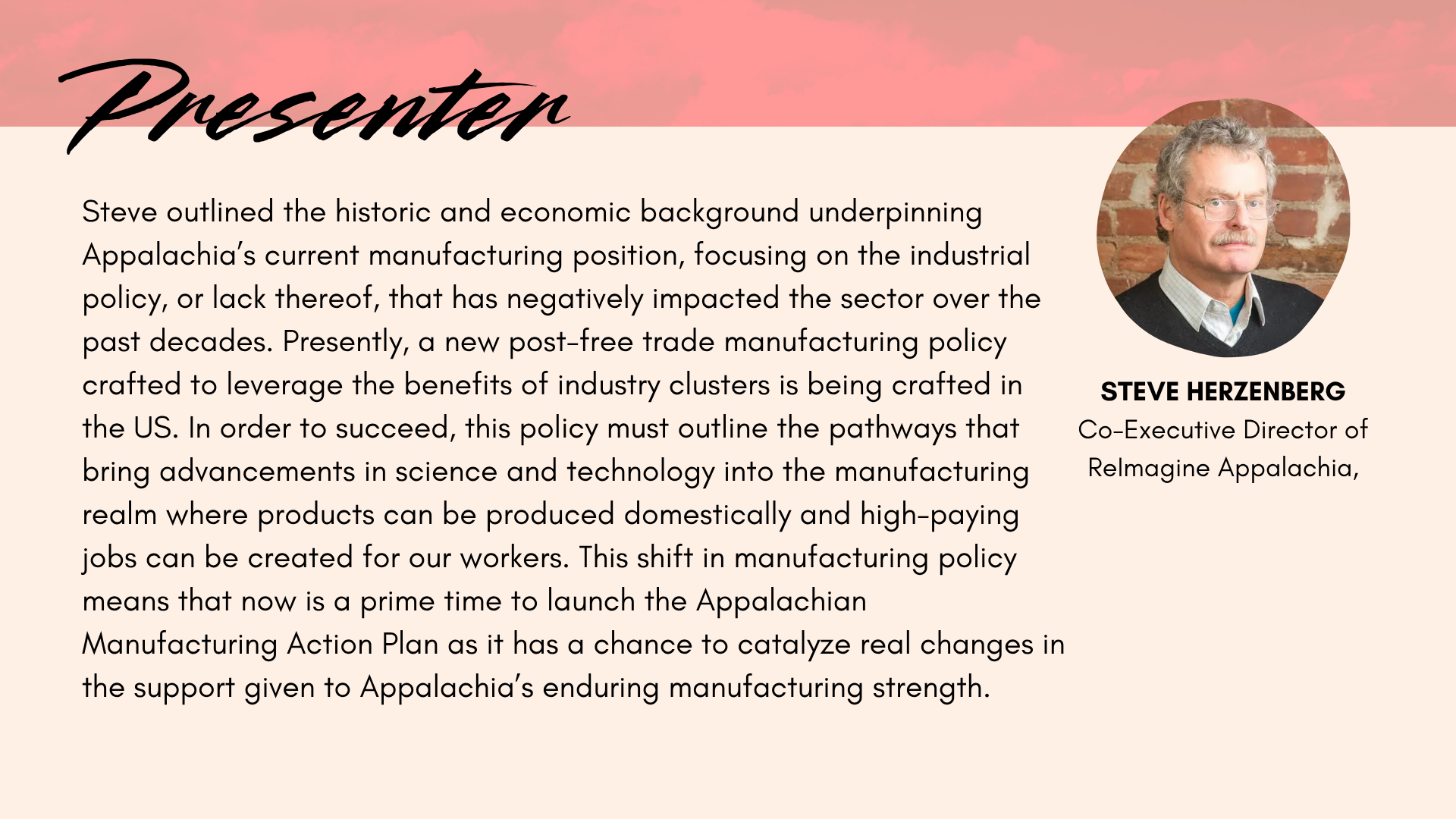
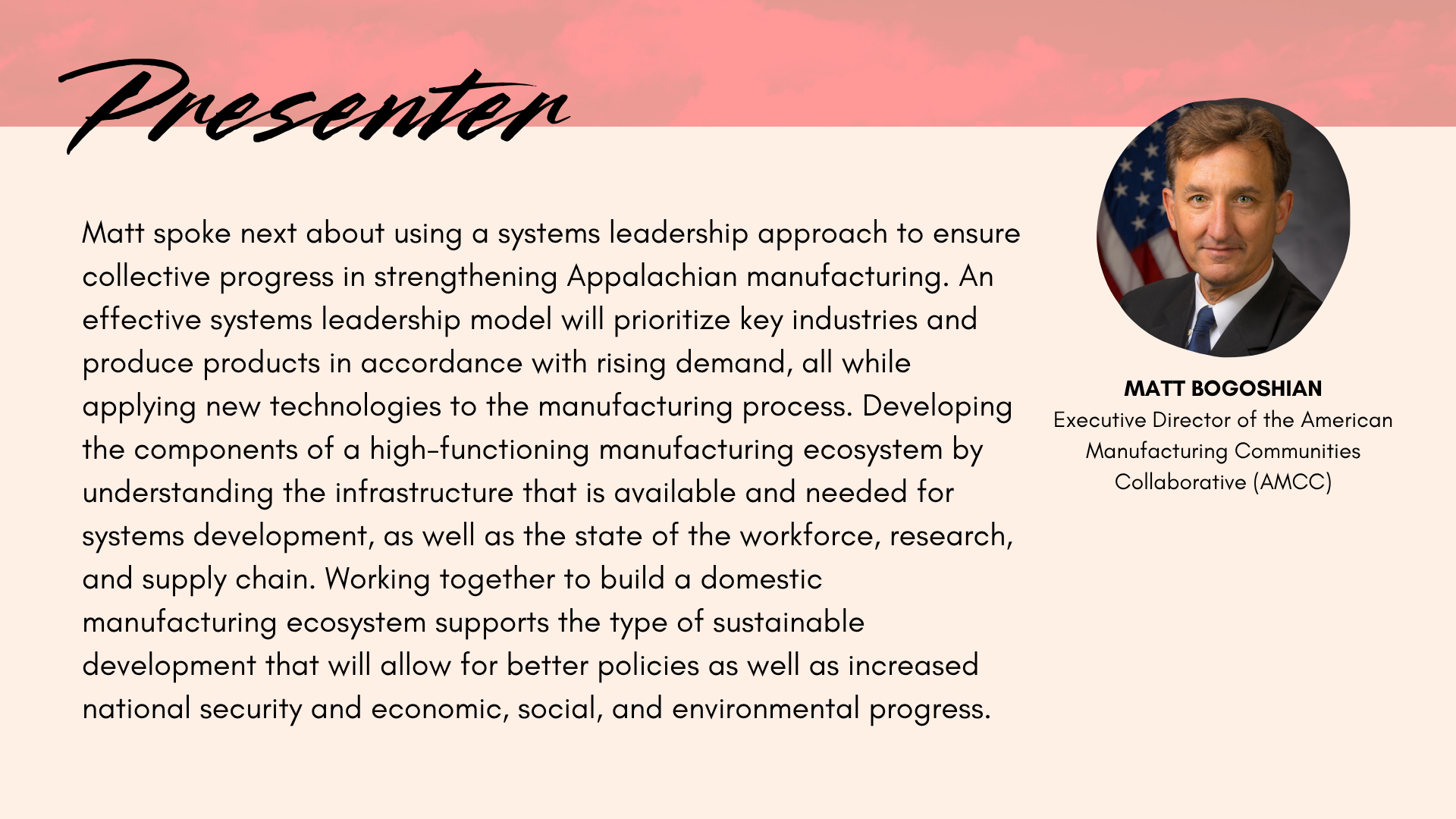
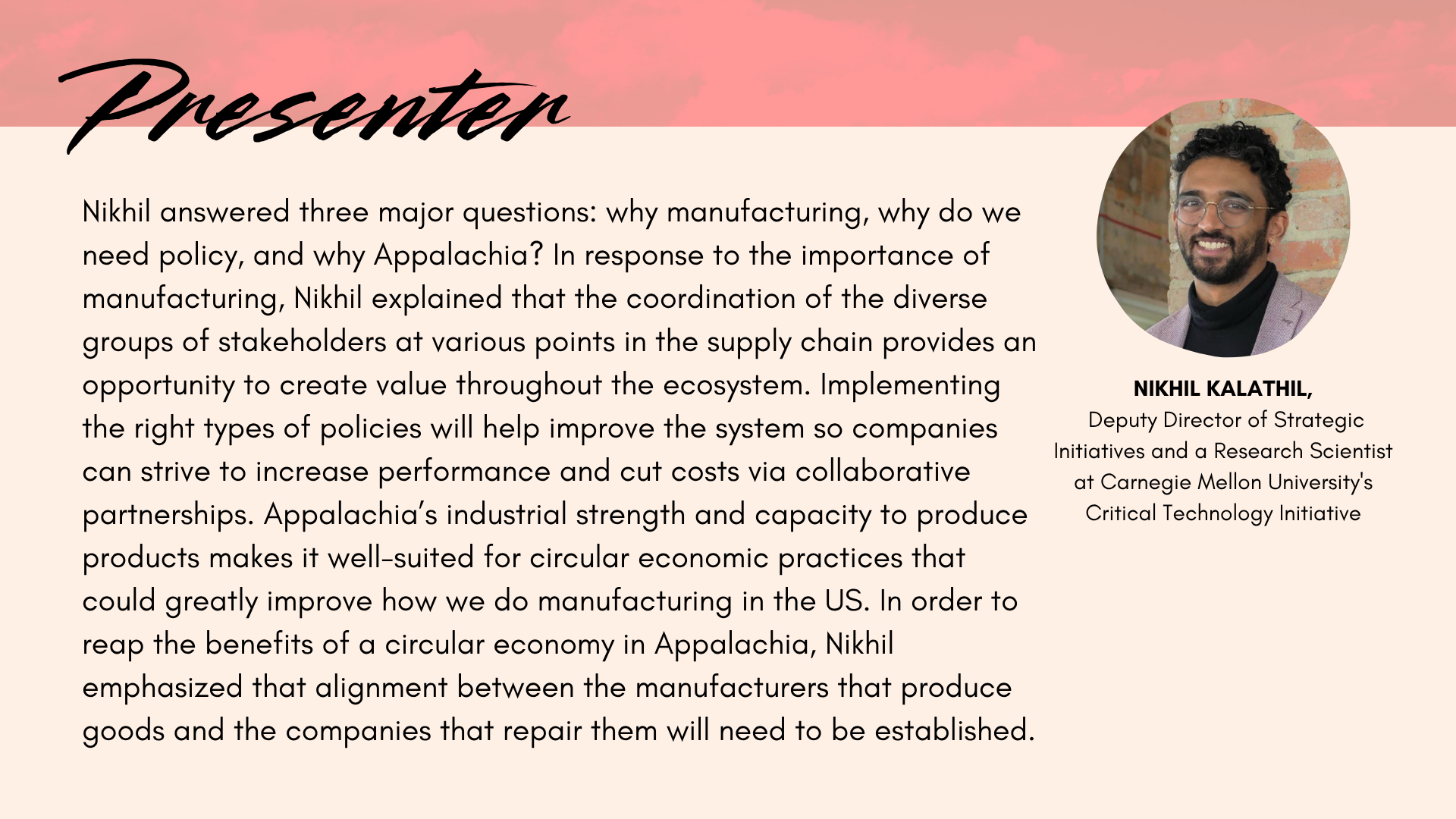
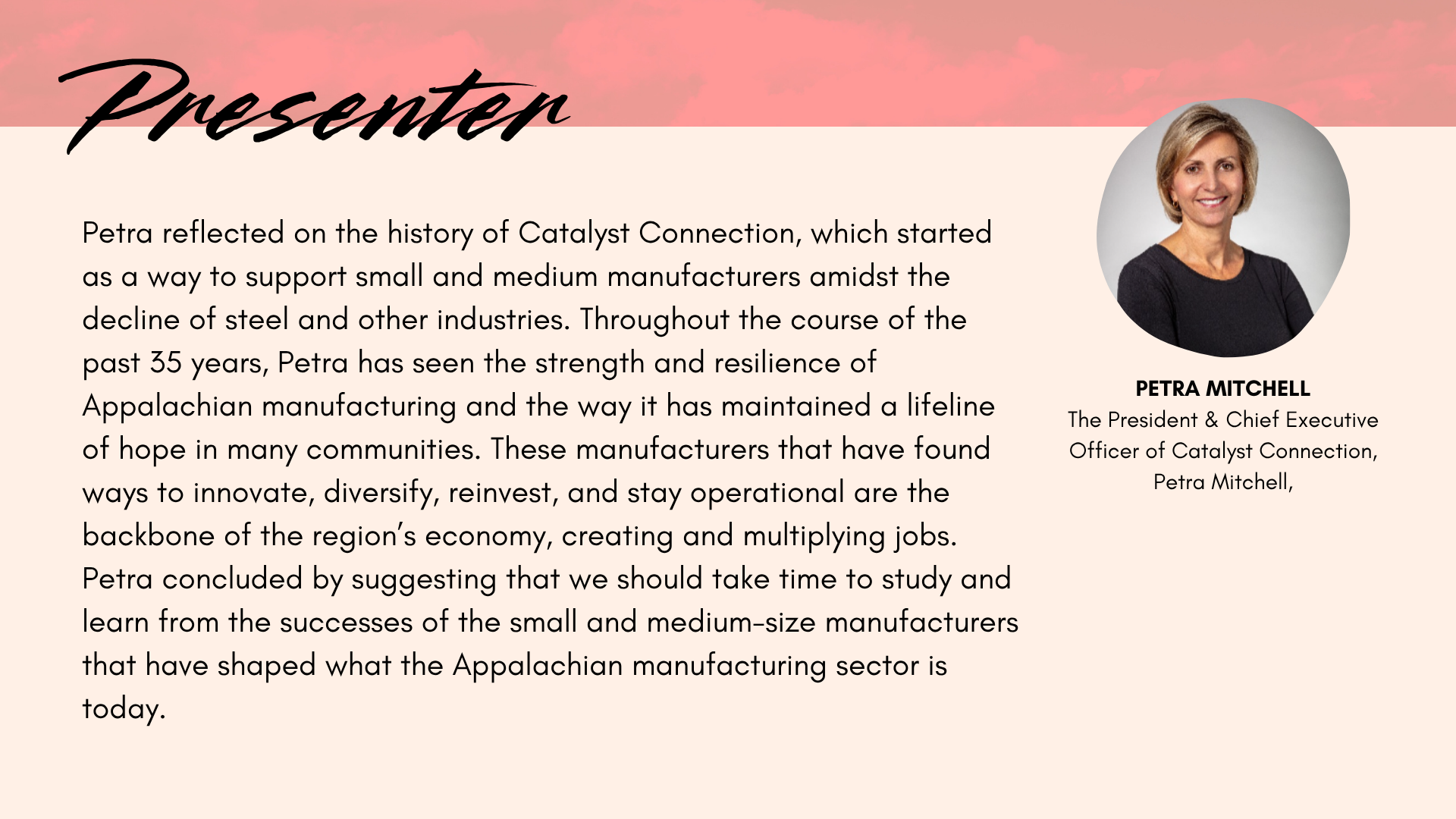
Speakers:
- Steve Herzenberg, Co-Executive Director, ReImagine Appalachia
- Matt Bogoshian, Executive Director, American Manufacturing Communities Collaborative (AMCC)
- Nikhil Kalathil, Deputy Director of Strategic Initiatives and a Research Scientist at Carnegie Mellon University’s Critical Technology Initiative & Senior Advisor for Ecosystem Assessment for the American Manufacturing Communities Collaborative (AMCC)
- Petra Mitchell, President & Chief Executive Officer, Catalyst Connection
The second plenary ended with a poll to gather audience input on Appalachia’s strongest assets to expand manufacturing in the region and the ways we can ensure the future of manufacturing in Appalachia is sustainable and equitable.
Breakout Session 2:
Participants chose to attend one of the following breakout sessions.
1b: Make it in Appalachia Continued: We know Appalachia has manufacturing strengths, but in this session participants shared their thoughts on how exactly these strengths can be leveraged and turned into tangible new opportunities.
The Wood industry / mass timber and hemp, livestock (beef and pork), sustainable hemp or flax-based textile materials, industrial hemp products (e.g. hempcrete), rare earth elements, and products that reuse coal waste including, building materials, batteries, and advanced aerospace and tooling were identified as areas in which Appalachia could become a hub.
- Appalachia could leverage its strength in basic industries and make things at the base of the supply chain greener (energy products, steel, wood) to add value up the supply chain
- A collaborative atmosphere, sustainable agriculture, circular systems, and riverways for transportation could help support the future of manufacturing
- Economic development organizations such as (ARC Local Development Districts) hold planning sessions with their communities, labor and business. This is a good approach to building trust and starting collaboration.
View the full agenda and notes here: https://docs.google.com/document/d/17ZgPKvwGX75q2dBlemORYJpOJBe3VgClZuXLXrjoFp0/edit?usp=sharing
View the recording here:
https://drive.google.com/file/d/1QjFTuGhrZwm6ZVptV6RtrIfbUe-r3Tv0/view?usp=sharing
2b: Invest in Appalachia: Appalachia is ripe for private investments – with its assets and skilled workforce from the coal industry that can pivot towards the new energy economy, rare earth elements and critical minerals that can be mined from coal ash ponds and acid mine drainage, and carbon-friendly rail and waterway transportation systems. In this session participants discussed how to tell the region’s story to potential investors.
Appalachia needs coordinated storytelling and shared talking points that highlight its quality of life, natural assets, skilled workforce, and industrial capacity to attract investors and overcome outdated perceptions.
- A regional “one-stop shop” for investors that links workforce data, site availability, and key contacts would streamline communication, align states, and make it easier for businesses to navigate opportunities across Appalachia.
- Early engagement of labor unions, schools, and training programs is critical to ensure workforce alignment with growing industries like healthcare manufacturing, automation, and energy technologies.
- To boost competitiveness, the region must address access to capital, infrastructure gaps (especially broadband), regulatory uncertainty, and fragmented permitting processes while leveraging public-private partnerships and creative financing models to de-risk investment.
View the full agenda and notes here: https://docs.google.com/document/d/1rxsift_UD9ZyKqkYQZiQeJ3vpMOwjYv2hXJnqKgBLmY/edit?usp=sharing
View the recording here:
https://drive.google.com/file/d/1a5HDalVDKqoehHHFdCAzHWySlk6fpssD/view?usp=sharing
3b: Decarbonize Appalachian Industry: The Ohio River Valley was the heart of the industrial revolution and still maintains significant manufacturing strength compared to the rest of the nation. In this session participants considered how we can help ensure the region’s industry thrives in the new clean economy while maintaining its global competitiveness by reducing its carbon footprint (and creating good jobs in the process).
There is a need to inventory and coordinate available programs, incentives, and technical assistance for companies pursuing emissions reduction and energy efficiency. This resource mapping could help support smaller manufacturers.
The exact impact that data centers will have on electricity requirements and available incentives is still up in the air
It would be helpful/make sense to do an inventory of the RA footprint to save companies energy and money as part of the RISE PA Action Plan.
- Act 129 programs (finance industrial decarbonization including energy efficient equipment), energy service company models (where projects are funded for free up front), and working out arrangements with leased manufacturing equipment may be financing tools for decarbonization, though smaller firms often lack capacity to access them.
- Rural co-op organizing can be highly effective
- Rural Power Coalition, mostly NE and MW; got $10 billion for coal plant
- retirements from the IRA
- Sustainable practices should rest on the three pillars of circularity, local sourcing, and efficiency
- RISE PA (statewide industrial decarbonization grant program) could serve as a model for other states
- We should figure out how this might work
View the full agenda and notes here: https://docs.google.com/document/d/1dMgz1VXsKe-hZ06SoIGuGmLuKkQQ-mDu0On_B_MEv_w/edit?usp=sharing
4b: Redevelop it in Appalachia: Some of the most significant assets in coal communities are shuttered coal-fired power plants, which once served as the region’s primary source of good jobs and the foundation for the local tax base. This session focused on how, with suitable investments, shuttered and shuttering coal plants can be redeveloped for new opportunities in the sustainable industries of the future.
There are success stories in the region!
- Policies and procedures are needed to address bureaucratic barriers to development such as outdated encumbrances on property titles
- Programs like PA SITES can help with pre-development to increase site attractiveness for development. Other states could follow this example. EPA Eligible Planning Activities could help too.
- There is a need to increase collaboration through education to empower more people doing the work!
- Educate economic developers, industrial developers, and state government by showing how concepts benefit them and impress the investors
View the full agenda and notes here: https://docs.google.com/document/d/1YV19c03HZDyFaczspNo1EnOMJoYJQLPOMEqJyGFHO4U/edit?usp=sharing
View the recording here:
https://drive.google.com/file/d/1J6pp9vT_KveW2viGX-uXMJnQ5rHrcUbR/view?usp=sharing
5b: Who Owns It?: This breakout session sought to answer the questions of who owns the land, and how can it be accessed? The trend of absentee land ownership, combined with complicated land policy, divided ownership and lack of accurate records can be a barrier to new development, particularly on former mine sites or brownfield sites. This session discussed these dynamics, new resources to track and map land ownership, and future strategies to address this centuries old dynamic.
Working with land ownership records can be complicated.
Some records are not digitized, some people don’t want to share records for free, and some areas don’t have capacity for proper data management
Even if the records are obtained, the split between mineral rights and surface rights presents challenges
This matters because you need ownership tracked for testing and evaluation of land safety and remediation
Redevelopment decisions must include community input particularly as low-income residents often live closest to former mine lands where new developments would occur.
Linking land use, brownfield redevelopment, and equitable economic planning can advance just transition goals across Appalachia.
Landbanks, state policy pilots, and initiatives like the Appalachian Land Academy and Rekindling Project are helping with this endeavour
- There are many examples of work being done in this area
- On the policy side, Ohio passed House Bill 15, a new law to fast-track energy projects on former coal mines and brownfields and the WV Legislature has some other proposals at play like the Landbanking law, which puts abandoned land into a landbank
- The Land Use Academy, The Rekindling Project, ARC, WV Brownfields groups, and Virginia Brownfield Assistance Fund are at work to address this issue
View the full agenda and notes here: https://docs.google.com/document/d/1VCGhlfgrjxnjaxo_6jj7MZv70jkd2vvSa2fhE0jnuVg/edit?usp=sharing
View the recording here:
https://drive.google.com/file/d/13_mZfwl02R8Xk9izee9tJOtgSPfjfZY5/view?usp=sharing