
August 3, 2026
The Ohio River Valley of Appalachia, originally home to the industrial revolution, is ready to make a manufacturing comeback. Despite decades of global outsourcing and the decline of the coal industry, the region remains manufacturing strong when compared with the rest of the nation. We already have the skills and the assets to do it. By breaking down barriers to employment for low-wage and disconnected workers, investing to upskill residents for 21st-century jobs, and recruit more of the region’s young people who too often leave the region for economic opportunity elsewhere, we can prepare the workforce of the future. By strengthening regional partnerships, resource sharing, and drawing down federal resources, we can help the region’s small- and medium-sized manufacturing enter new and growing markets in the clean economy, redevelop shuttered coal plants into eco-industrial parks, and refire former factories and put current & future generations to work in safe, sustainable, good-paying jobs right here at home.
That’s why this Summer, ReImagine Appalachia went on a tour of Central Appalachian states to build support for an Appalachian Manufacturing Action Plan (A-MAP), which sets out action steps and a vision for once again turning the region into a modern manufacturing hub for the nation.
A brief history of manufacturing in Appalachia
Appalachia has a long history of manufacturing, and to this day, remains highly competitive in the sector. The region makes everything from metals to machinery, wood products, concrete and cement, plastic, glass, and more.
Despite global outsourcing and national deindustrialization, Appalachia’s manufacturing expertise held strong. The region retains assets like its skilled workforce, mature supply chains, dense carbon-friendly transportation networks (rail and waterways), access to major markets, universities, technical training schools, networks of union apprenticeship programs, and centers of research and development. Today, job growth in Central Appalachia’s critical manufacturing industries continues to outpace the nation. The region boasts particular strengths in manufacturing metals, plastics, and building materials, to name a few specific sectors. These industries are poised to produce the products of the future from wind turbine components, to engineered lumber to bioplastics, other alternatives to single-use plastic, and battery technology. The region has the potential to lead the nation in circular economy development, where one company’s waste becomes another company’s raw material, becoming more globally competitive with overseas markets.
As you review the stops, we invite you to queue our roadshow-themed playlist!

Creating the A-MAP: collaborative solutions for modernizing and expanding regional manufacturing.
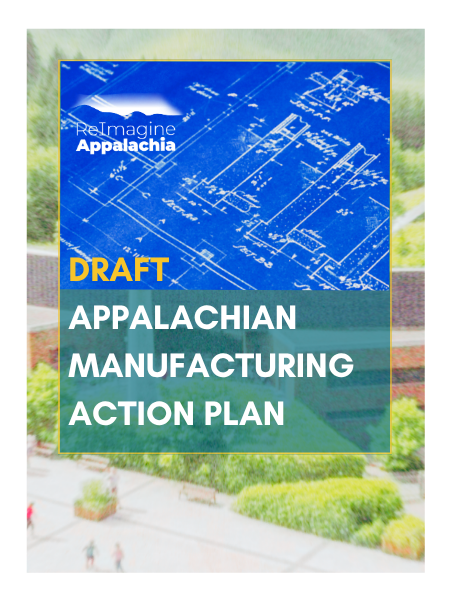
Starting in 2021, new federal funding combined with private investment led to growth in domestic manufacturing, particularly in the clean energy sector. The region saw the beginning of a manufacturing renaissance and was poised to lead a national surge in global competitiveness. In 2025, federal support diminished, but Appalachian communities have demonstrated their speed to mobilize and desire to build a brighter future. By working out the kinks in persistent regional issues, we can clear the path to continue the region’s rebound. This is why ReImagine Appalachia created The Appalachian Manufacturing Action Plan (A-MAP).
Many of Appalachia’s challenges can be addressed by strengthening networks and collaboration between its states and attracting investment. One of the region’s most unique assets is a shared cultural identity that has grown from common history, hardships, and strengths. This means collaboration can more easily cross state lines to build out a comprehensive manufacturing ecosystem. Solutions in one place can be applied to challenges in another with a high expectation of good outcomes. Market access issues that limit available tech and materials in remote areas can be addressed by strengthening regional supply chains. Rail and waterway networks and extensive heavily reinforced electrical grid infrastructure can be upgraded and re-deployed for low-carbon freight transportation and meeting the needs of the clean energy economy. Barriers to employment can be overcome by taking workforce development structures that work in one community and adapting them to another. Interstate collaboration to advance clean tech manufacturing can also reduce youth outmigration by building 21st-century career opportunities that offer them a bright future.
The A-MAP outlines the policies, funding, and collaboration needed to build regional prosperity using existing strengths. It was essential to incorporate regional expertise and firsthand local experience. So, this summer, we took the action plan on a roadshow to gather expert and stakeholder feedback, refining the piece to ensure it reflected the diverse needs and opportunities of the region.
The Summer 2026 Appalachian Manufacturing Roadshow
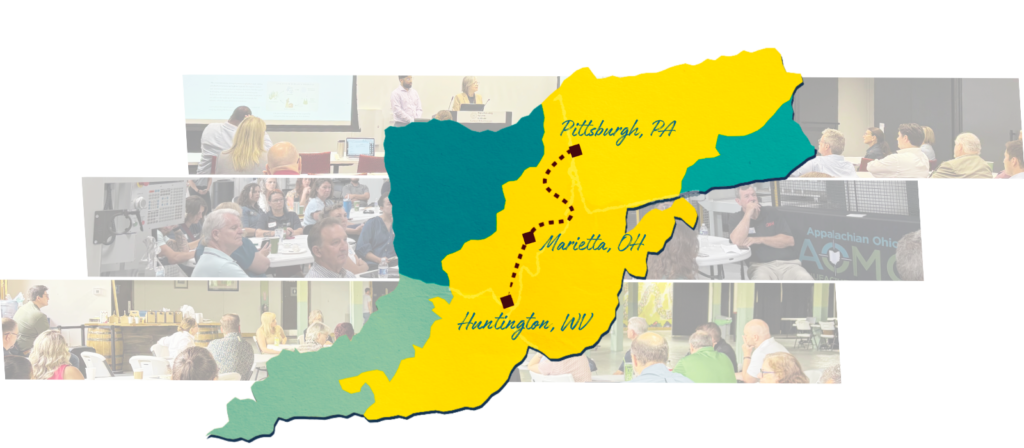
The Summer 2026 Appalachian Manufacturing Roadshow convened a wide array of stakeholders such as city and labor leaders, economic and workforce development entities, community organizers, as well as environmental advocates, among others, at three stops: Huntington, West Virginia; Marietta, Ohio; and Pittsburgh, Pennsylvania. We spent months planning the series–alongside the American Manufacturing Communities Collaborative (AMCC), the ACT Now Coalition of West Virginia, Coalfield Development, Marshall University, Appalachian Ohio Manufacturing Coalition, Rural Action, and Catalyst Connection–to help tailor event discussions around the most pressing local needs. Our goal with each stop was to engage attendee expertise and draw out novel solutions and diverse concerns.
The three-day tour gave us insight into the priorities and setbacks of each state’s unique manufacturing ecosystem.
Manufacturing Roadshow Media Hits





First stop: Huntington, West Virginia
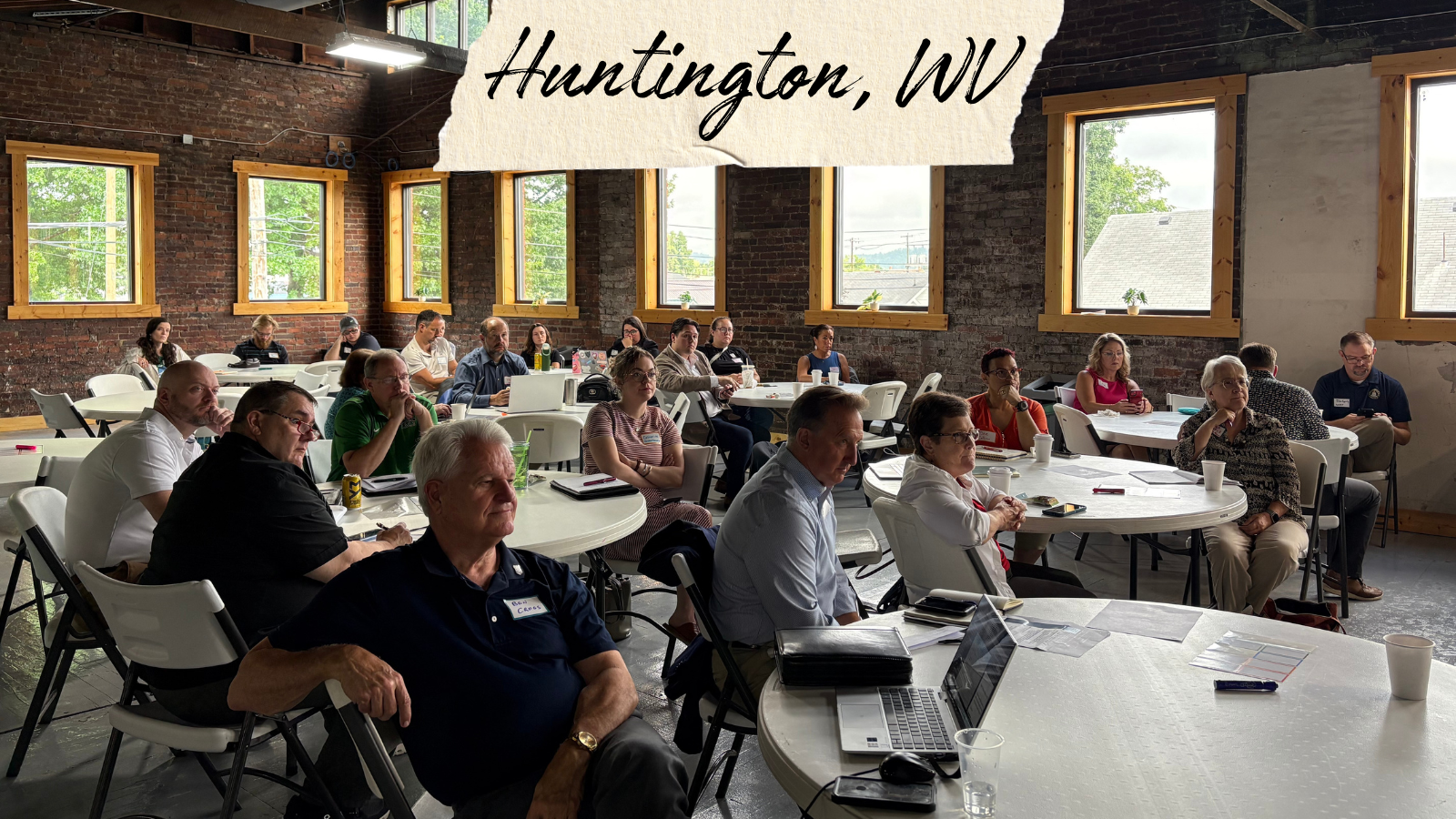
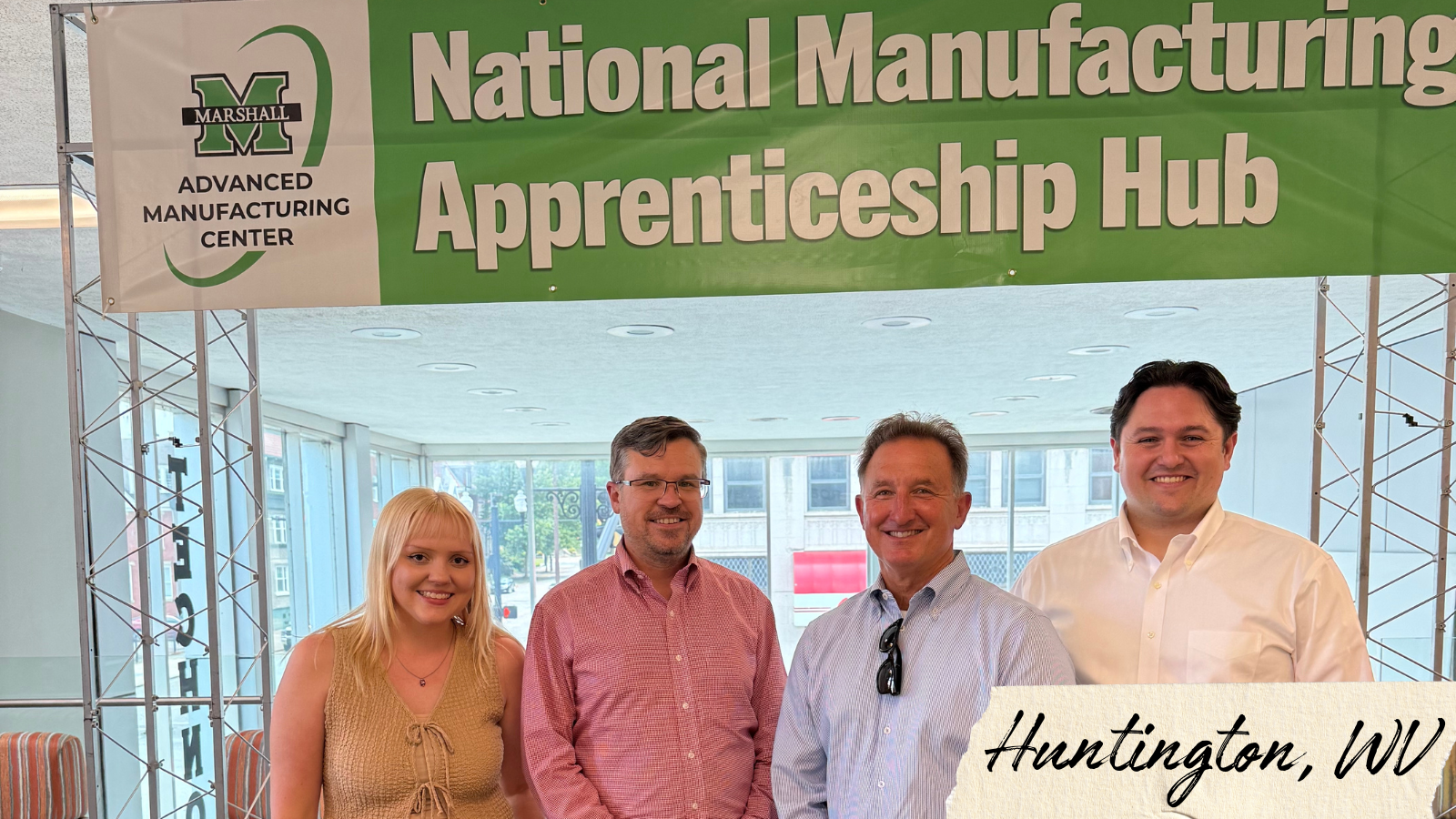
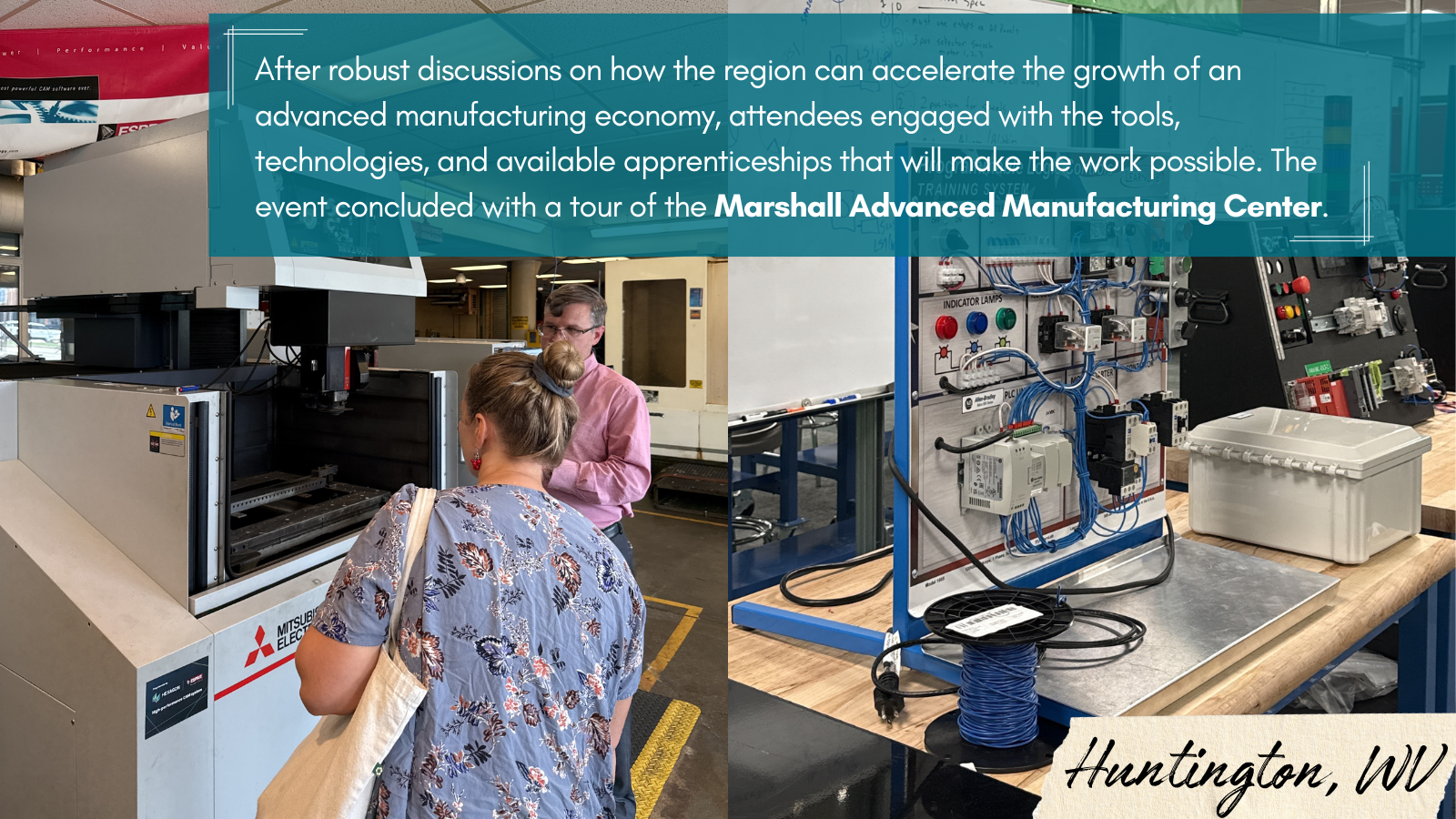
Childcare, access to quality jobs for low-income residents, worker training, affordable housing, youth outmigration, and care for the land and water supply. These were the top concerns attendees shared at our first stop in Huntington, West Virginia.The town has a distinguished past as a manufacturing stronghold for glass, brick, and transportation products, but it has suffered economic decline since the 1950s. Today, Huntington is part of a statewide struggle to form a strong manufacturing supply chai
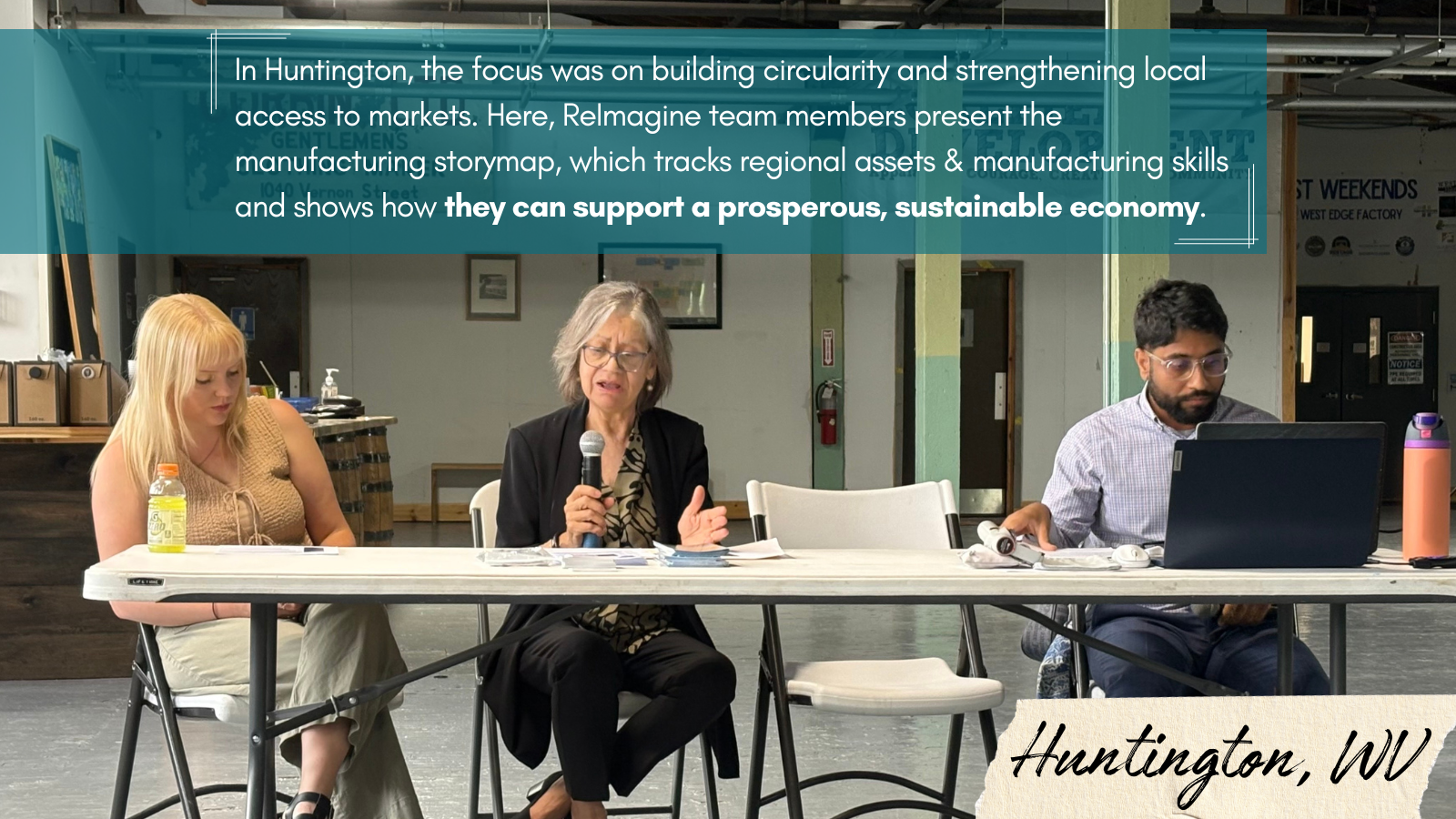
At the West Edge Factory, ReImagine Appalachia, American Manufacturing Communities Collaborative, and ACT Now Coalition, as well as additional partners Coalfield Development and Marshall University’s Advanced Manufacturing Center, engaged with local leaders and community members about their top concerns and priorities related to manufacturing in the region. Before beginning the discussion section with attendees, ReImagine Appalachia team members presented our interactive story map tool, which tracks industrial assets across the Ohio River Valley region of Appalachia, pinpoints counties with high densities of particular manufacturing skills, and outlines how those assets and skills can power sustainable economic initiatives.
Learn about the manufacturing strength of Cabell County, where Huntington is located, and how it can play a role in a modern economy with an illustrative example here: Cabell County Story
So what are West Virginian community stakeholders’ concerns, and what do they need?
Discussions started with a rehash of the challenges that have hurt West Virginia’s wellbeing for decades: too few tech initiatives, limited investment, lack of workforce training, and youth outmigration. But as talks advanced, what came to light was that many of these challenges are already being addressed by manufacturing initiatives within the state.
- Coalfield Development is redeveloping Huntington’s shuttered industrial facility, Black Diamond, into a sustainable logistics hub that will create jobs while supporting renewable energy.
- Organizations like Coalfield Development and Jobs & Hope WV are working together to train individuals with barriers to employment to enter the manufacturing workforce by developing a manufacturing apprenticeship program that could become a model for the nation.
- Marshall University’s Advanced Manufacturing Center received a $1 million donation this year to develop a new CNC machining training center in Huntington, which will be vital for upskilling the next generation of manufacturers.
- The West Virginia Building & Construction trades are offering apprenticeships in everything from sheet metal work to industrial painting, helping to ensure that local development sticks with local workers.
As recognition grew among attendees a regional manufacturing momentum already underway, attention shifted to how to amplify stories about these initiatives and strengthen collaboration and partnership.
Local stakeholders made clear they want to build awareness for what’s working in the state. The vacuum left by the decline of the coal industry and traditional manufacturing only spells to the younger populations that there is nothing to stay for, or that available opportunities would only further pollute the land and degrade their health. Attendees wanted to see more youth engagement efforts that emphasize the safe, good-paying, sustainable jobs that modern manufacturing can offer.
West Virginia communities are typically tight-knit and mutually supportive. Young people are often not inclined to leave their support systems unless they feel they have no choice. So, attendees pushed for more active collaboration and resource sharing between existing small- and mid-sized manufacturers to help keep community rooted initiatives going strong and continue to build trust and engagement among locals.
Local manufacturers’, labor leaders’, and community members’ priorities by bullet points:
- Support the successful build out of the recently enacted West Virginia Tri-Share Childcare Program, creating a public-private partnership to share the high costs of quality child care equally among employers, workers and the state and make it more readily available. More than half of West Virginia is currently in a childcare desert, with a dearth of child care facilities, preventing parents from fully joining or remaining in the workforce.
- Build storytelling initiatives to lift up local modern manufacturing efforts and advocate for greater investment.
- Commit to greater collaboration between small- and medium-sized manufacturers and those working in the ecosystem to address challenges and needs of a growing workforce and manufacturing sector.
- Lead sustainable development initiatives that prioritize worker and community well-being.
- Ensure the availability of affordable housing matches any growth in the workforce.
Next stop: Marietta, Ohio
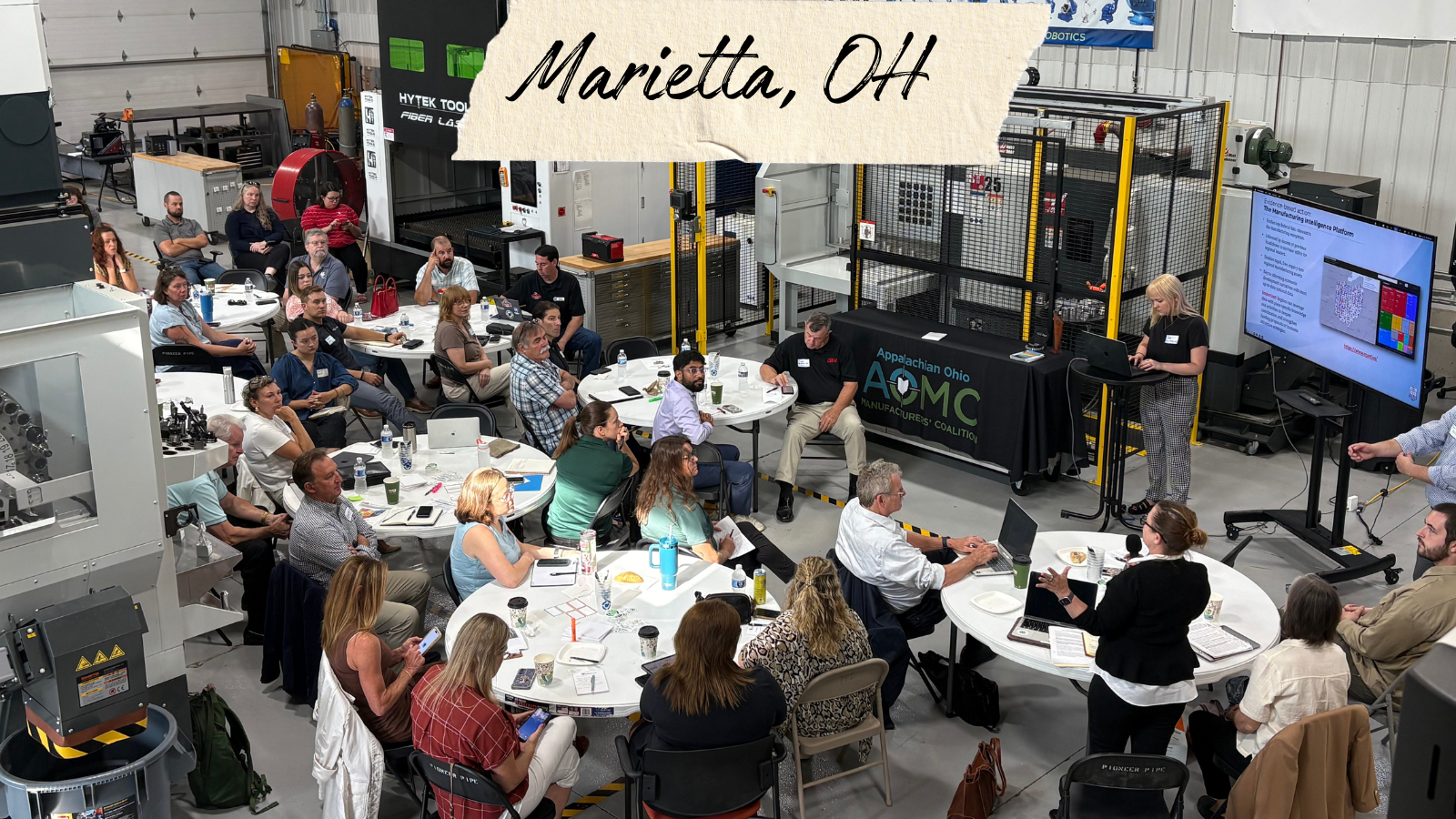
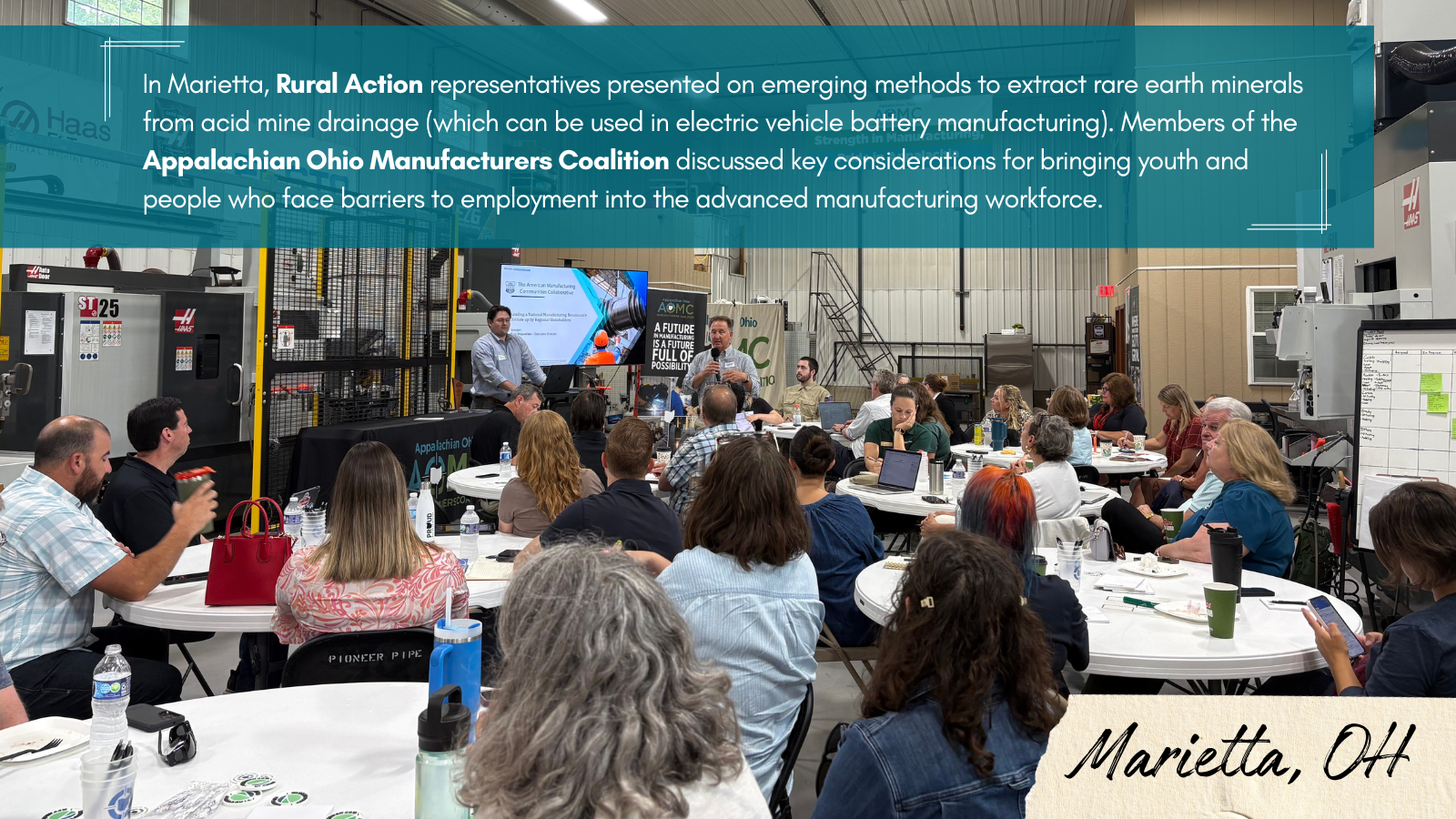
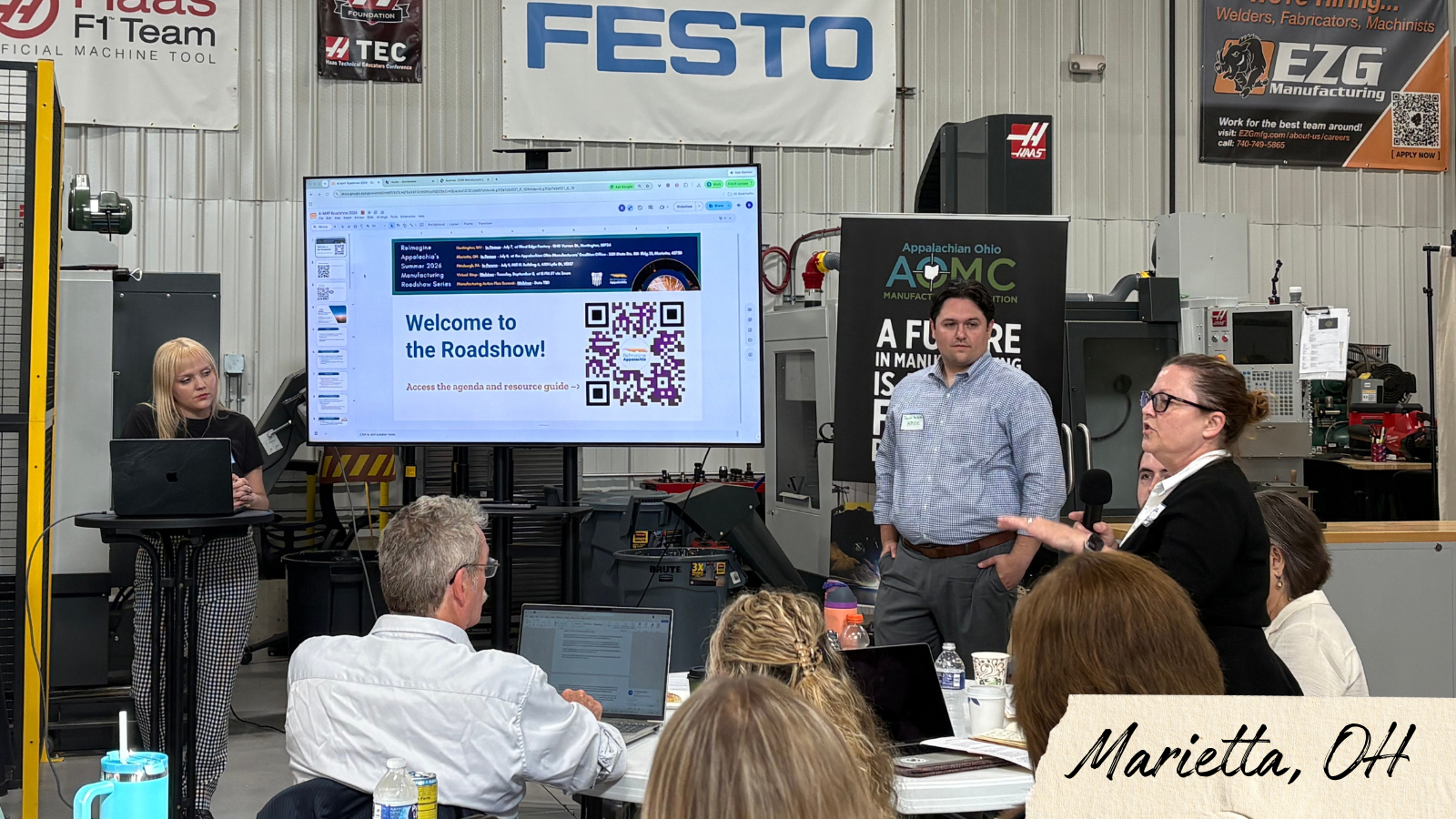
This event was co-sponsored by The Appalachian Ohio Manufacturers’ Coalition (who also hosted the event at their facility) and Rural Action.
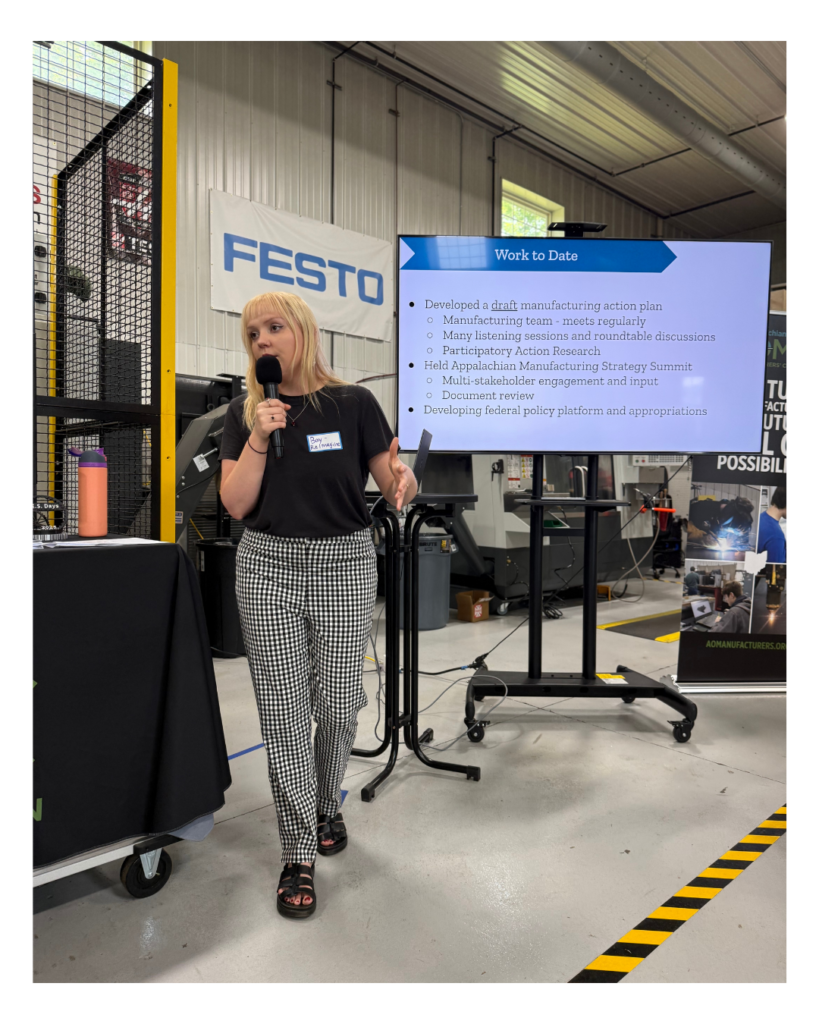
The town of Marietta has deep roots in manufacturing for alloys, ship components, and more. Learn about the manufacturing strength of Washington County, where Marietta is located, and how it can play a role in a modern economy with an illustrative example here: Washington County Story
The manufacturing sector does, however, face challenges. The workforce is aging, leaving big gaps in employment. Building workforce pipelines that usher in the next generation of workers and tackling barriers to employment (for example, criminal records related to the opioid crisis) were central to discussions at the Ohio gathering.
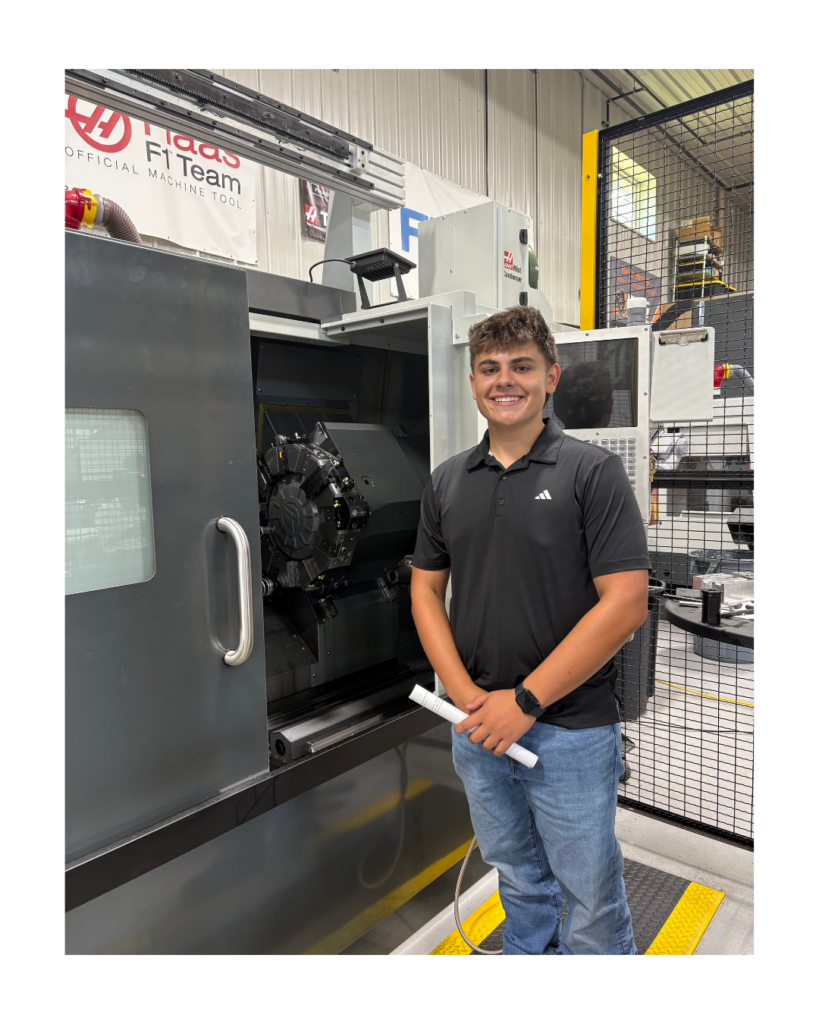
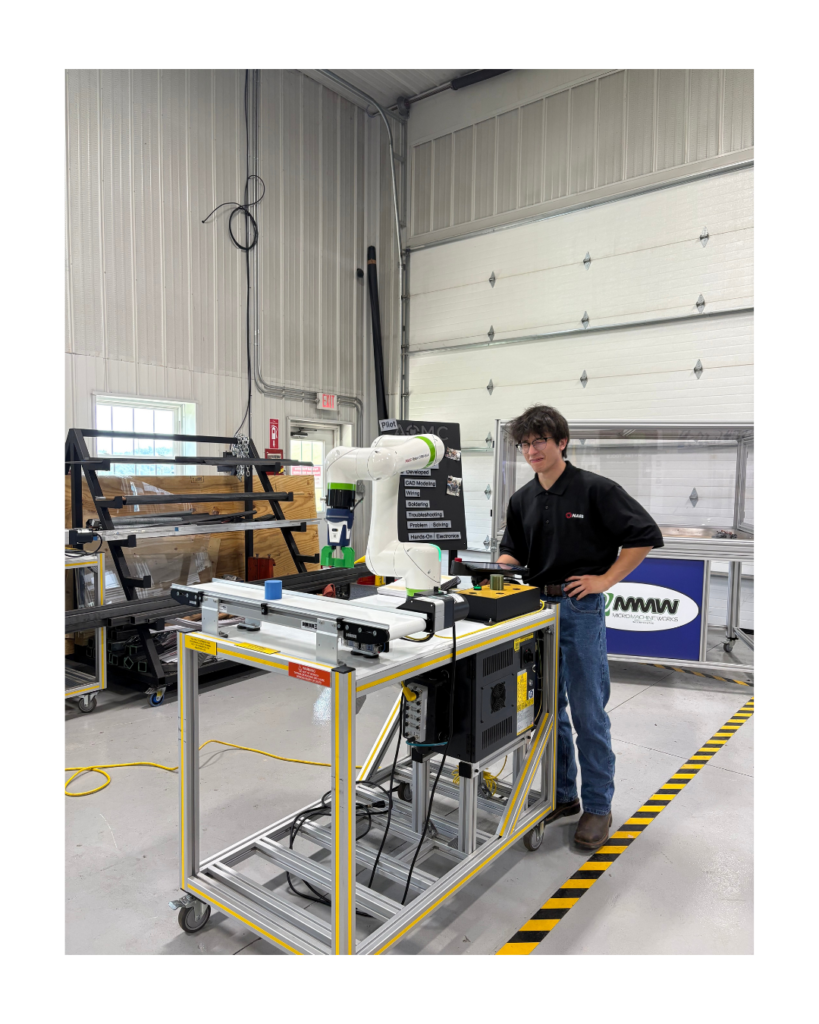
At the roadshow’s second stop, at the inspiring facilities of the Appalachian Ohio Manufacturing Coalition, it was clear that manufacturing is an evolving industry that offers 21st-century professional skills and high-paying jobs.
Appalachian Ohio Manufacturers’ Coalition (AOMC) which connects local regional schools to manufacturing training programs, showed off its mobile education lab and high-tech training facilities. After the programmed activities, the room was buzzing with a gaggle of young interns eager to connect with attendees and showcase their work and training efforts in everything from robotic welding, CNC automated laser-based machinery, and 3d printing to intricate design work. The interns expressed passion about their fields of study and prospects for job opportunities beyond their training as well as enthusiasm for remaining in the Ohio River Valley area. Outside of the facilities, attendees were able to interact with an intern-run mobile pop-up center, which AOMC transports to nearby schools and businesses to engage and excite students and communities in modern manufacturing.
Other exciting initiatives discussed include:
- Rural Action’s True Pigments initiative, which filters minerals from acid mine drainage for use in commercial paints and art supplies.
- The Hocking Hills Garment Center presented its circular textile manufacturing systems that eliminate waste and help keep supply chains local.
- The Southeastern Ohio Port Authority is remediating and redeveloping sites like shuttered coal plants and brownfields to become hubs for new industry and business. By working with public and private partners, they help bring resources and opportunities that strengthen the local economy.
So what are Marietta Ohio manufacturers’, labor leaders’, and community stakeholders’ concerns and what do they need?

Being airlifted into the Southeastern Ohio manufacturing eco-system today, you’d see lots of promise but uneven prosperity: large manufacturers are thriving while smaller ones struggle for basic funding and resources. Lacking sufficient childcare, you’d see working-age people locked out of job opportunities due to at-home needs, while career manufacturers age out of their roles and leave them unfilled. In newly declared opportunity zones (underserved areas that provide tax incentives to attract new investment), you would see communities starting exciting modern manufacturing initiatives, but struggling to raise awareness for their work, and in turn, lacking needed attention from partners and investors. At the same time, an immersive discussion at the Marietta Roadshow revealed that locals have a clear vision for the opportunities they want to build, and are already building many of the networks, assets, and skills needed to do so.
What attendees wanted:
Southeastern Ohio manufacturing stakeholders want to see more activity on the policy level. They want consistent, regular funding to reflect the fact that manufacturing work often lasts much longer than grant periods. That instability isn’t abstract. Attendees described real projects (such as the REAP grant for businesses and manufacturers) losing momentum because funding lapsed at a change in leadership. They also want to see opportunity zone designations in areas where small- and mid-sized manufacturing efforts are taking place to help attract private investment. What’s more, they want to see more government investment in existing opportunity zones because the designation in itself does not guarantee economic growth. They also want more investment in clean tech & energy, reuse, and redevelopment. These programs can be found in the region, but need to be funded and expanded, especially for purposes of attracting climate-conscious youth. Lastly, locals expressed an urgent need for more childcare resources. With less stress related to maintaining child welfare, employees can be more available, productive, and engaged in their roles, which would go a long way toward easing local worker engagement issues.
Local manufacturers’ and labor leaders’ priorities by bullet points:
- Opportunity zone designations in Appalachian manufacturing areas and increased investment in existing opportunity zones.
- Longer term grant cycles to reflect the lengthy processes related to building manufacturing infrastructure.
- Greater investment in childcare and housing.
- Increased investment in the initiatives already underway and new sustainable development plans.
Last stop: Pittsburgh, Pennsylvania
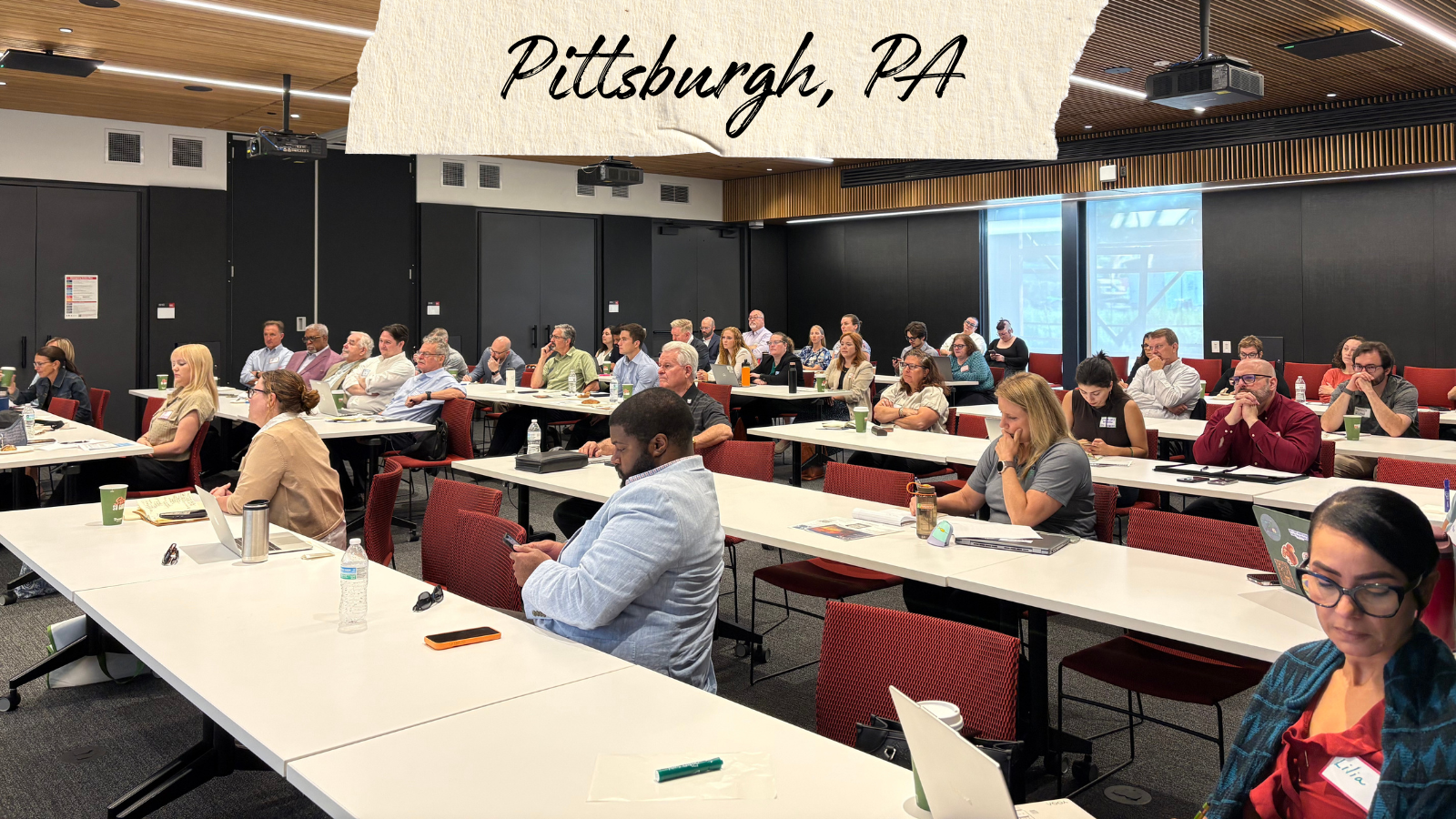
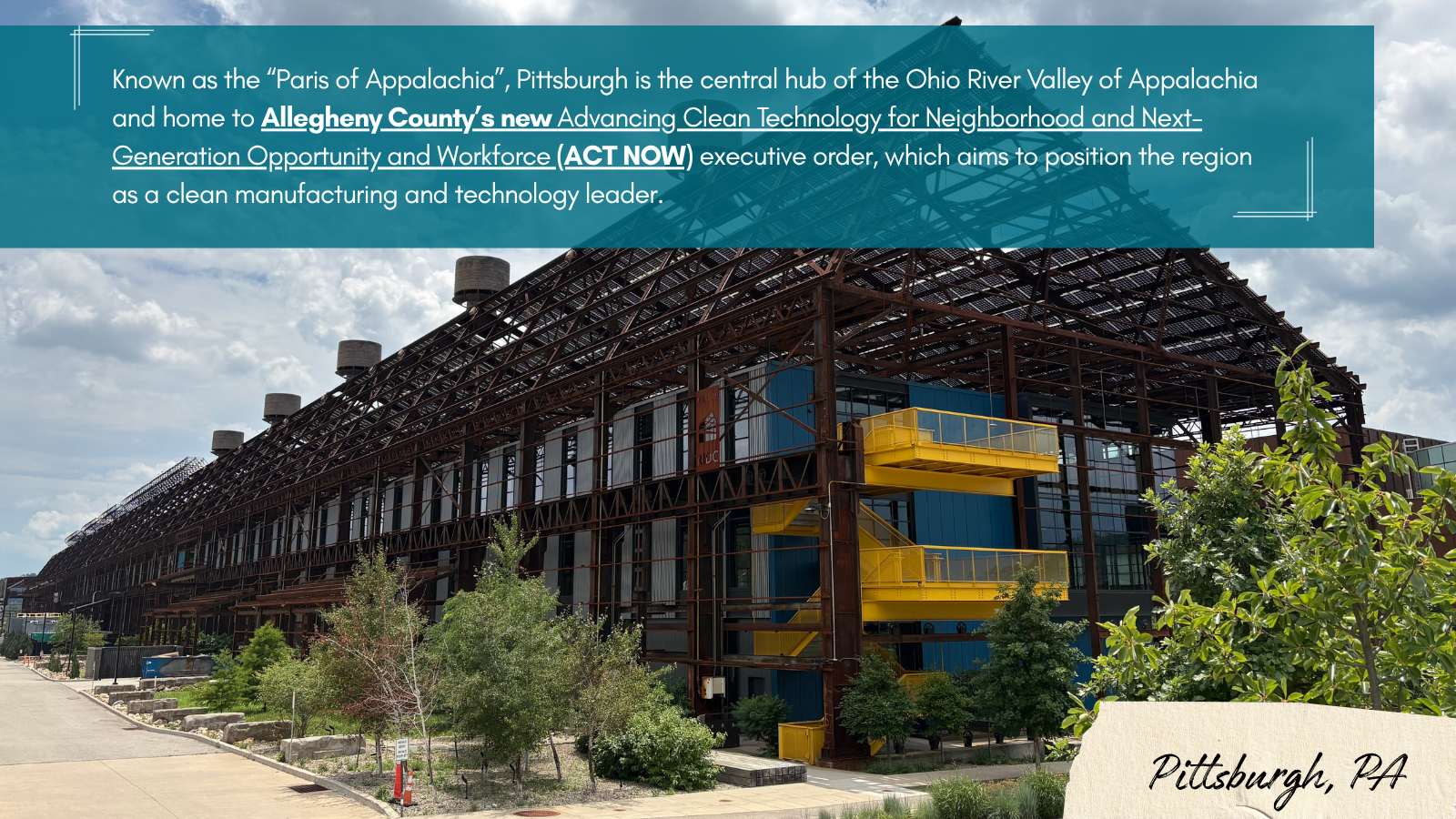
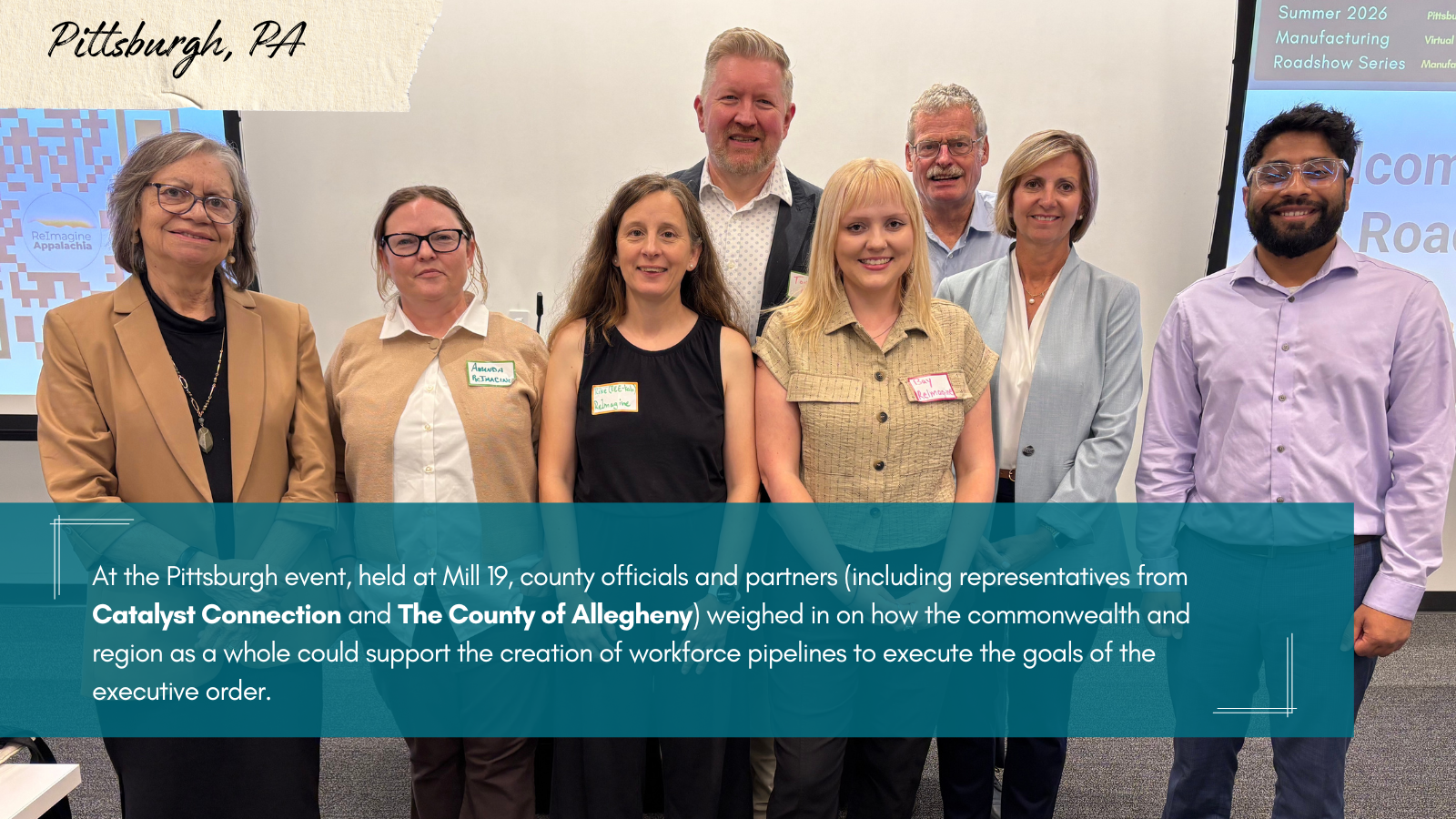
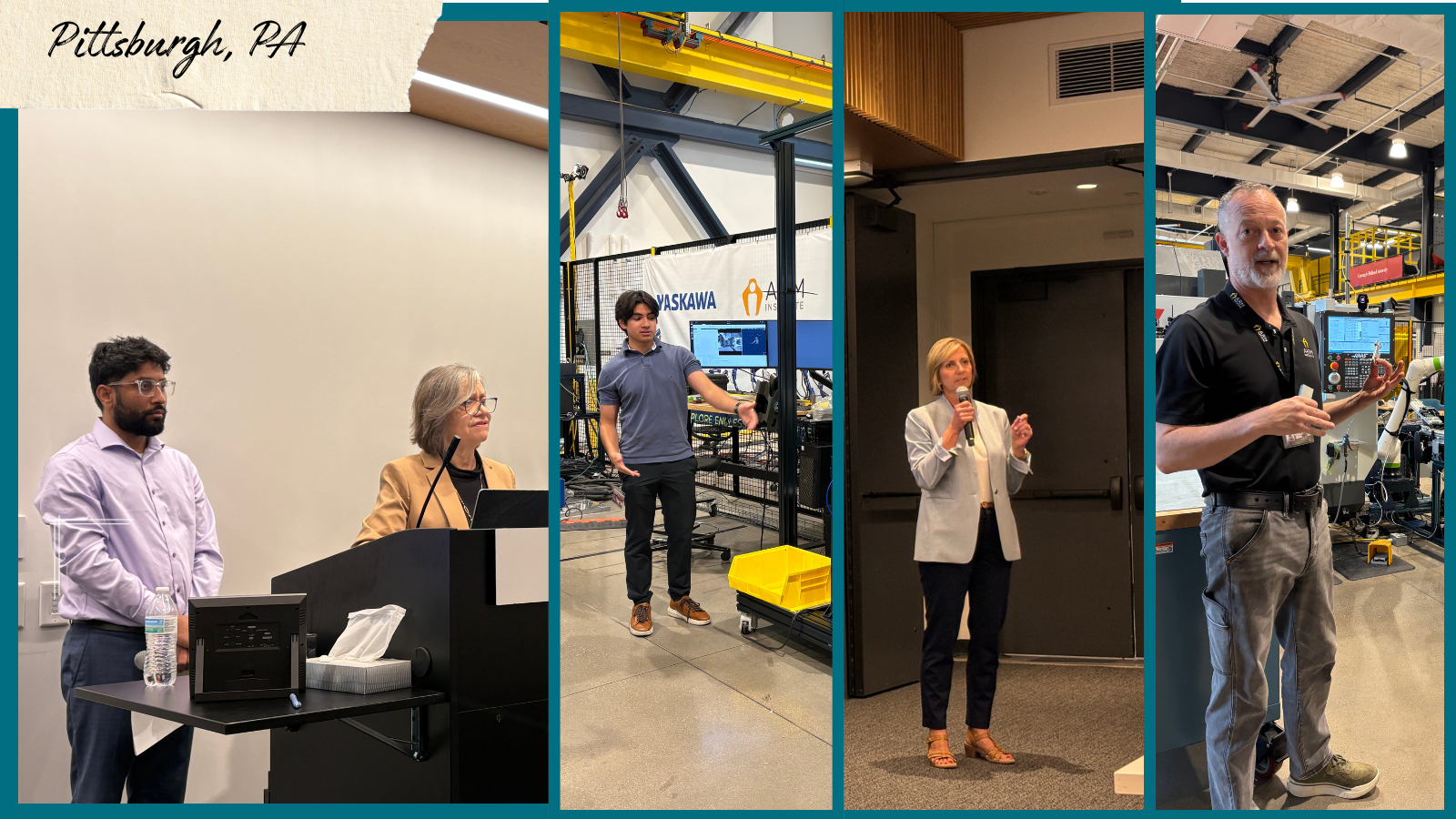

Pittsburgh is the central hub of the Ohio River Valley. At the time of our roadshow gathering, the surrounding Allegheny County had just enacted a new executive order to strengthen its clean tech economy. Allegheny County’s new Advancing Clean Technology for Neighborhood and Next-Generation Opportunity and Workforce (ACT NOW) executive order calls for positioning the region as a clean manufacturing and technology leader. Stakeholders at the Catalyst Connection office at Mill 19 strategized around how to build workforce pipelines needed to enable residents to execute the goals of the executive order.
Learn about the manufacturing strength of Allegheny County, where Pittsburgh is located, and how it can play a role in a modern economy with an illustrative example here: Allegheny County Story
So what are Southwestern Pennsylvania manufacturers’, labor leaders’, and community stakeholders’ concerns and what do they need?
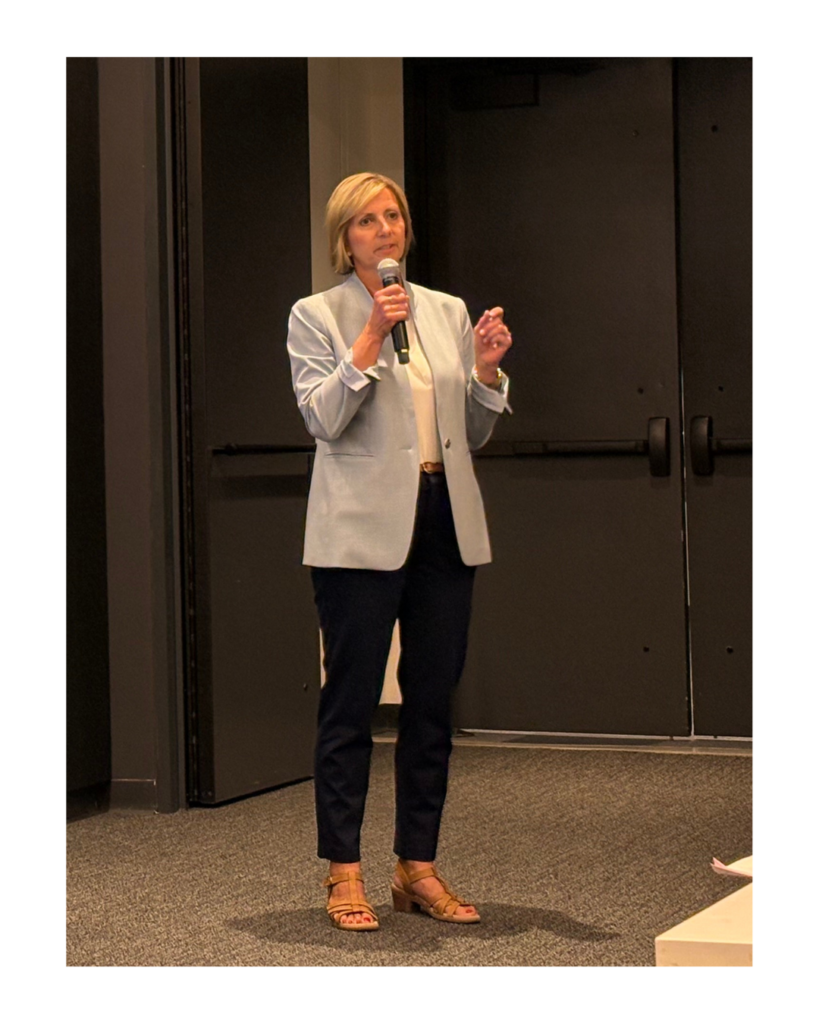
Pittsburgh and Southwestern Pennsylvania boast many exciting clean tech, circular manufacturing, and climate-readyness construction efforts in line with the goals of Allegheny County’s new executive order. However, companies state they are struggling to find workers already. Thousands of the region’s residents could theoretically be earning better wages and gaining in-demand technical skills if the proper channels were in place to recruit, train and place them. The construction industry, a holistic system of registered apprenticeship programs, driven by a longstanding industry-labor training partnership, thoroughly prepares recruits for a lifetime career of well-paying construction jobs, competes for the same talent pool and wins, thereby shrinking the talent pool available to the manufacturing sector. The commonwealth’s manufacturing sector could be more productive if it replicated the construction apprenticeship system and systematically recruited and trained residents who are struggling to find work or who are working minimum wage and missing out on a chance to thrive.
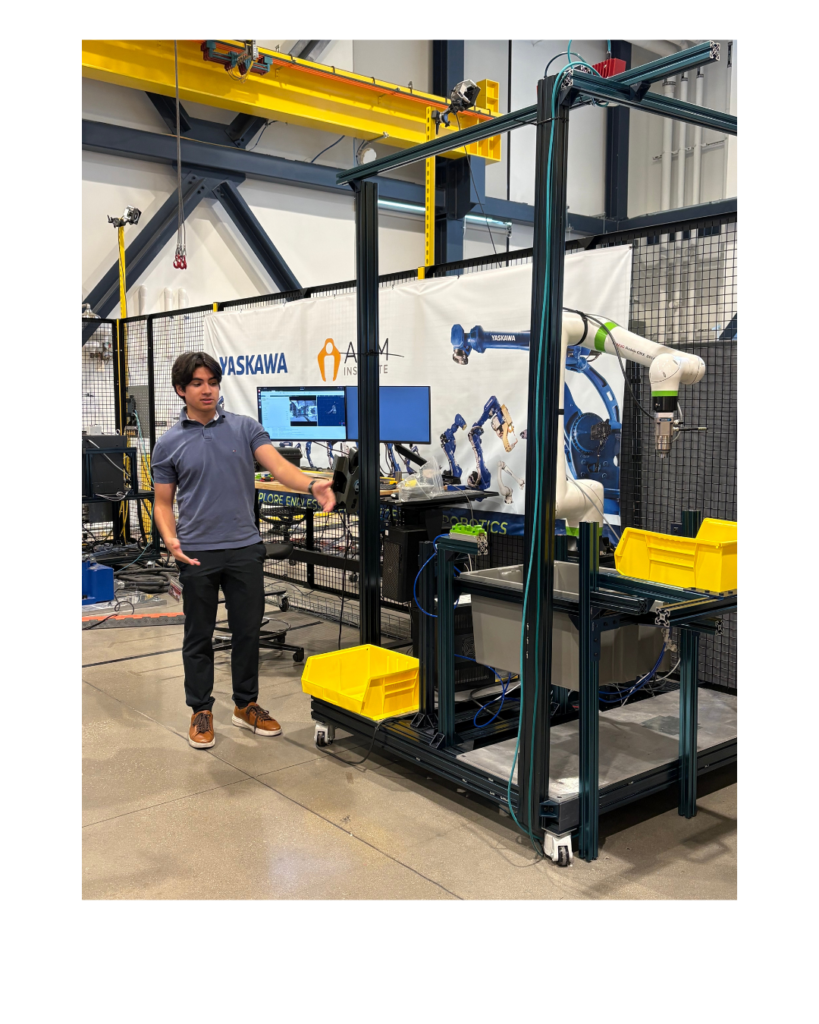
Manufacturing leaders are looking to young people. Expert attendees wanted more and better collaboration between the manufacturing industry and K-12, career and technical education (CTE), college, and apprenticeship programs to form a unified talent pipeline that drives the youth into these manufacturing roles.
Local manufacturers also want stronger youth education, outreach, and recruitment. Among other things, this means using social media to deliver engaging content and storytelling that shows how manufacturing has changed, and now extends to sustainable initiatives, applied sciences, and robotics. They want business leaders and elected officials to better speak to youth aspirations, environmental concerns, and misperceptions of the sector as being grueling, laborious, and lacking in upward mobility.
At its core, manufacturing is about making things. So, the sector is unique in that the work is straightforward and accessible to people without university degrees, but at the same time, foundational to the advancement of technology. Manufacturing leaders at the roadshow highlighted how the clear visual component of making things lends itself to storytelling because the work is easy to understand.
We just have to amplify it and build awareness.
By the bullet points:
- Build a workforce pipeline that connects K-12, CTE, college, and apprenticeships.
- Better engage the Youth with storytelling efforts that speak to their concerns and desires for safe, good-paying jobs that do not harm the environment or community health.
- Modernize manufacturing apprenticeships with more emphasis on software skills and robotics.
- Get more employers in the room for discussions about how to bring a new generation into the manufacturing space.
Conclusions
The roadshow’s strong turnout and audience interest underscored for us that Appalachia is ready to reclaim its rightful place as the nation’s hub for manufacturing. What has changed is the manner in which we get there. Residents want safe, secure, long-lasting jobs in industries that do not pollute the air and waterways. They want their local and state governments to invest in their futures, providing childcare support and return-to-work programs so that they can focus on building community wealth and creating a bright future for the next generation. But the unifying theme of both the roadshow and the Appalachian Manufacturing Action Plan (A-MAP) has been collaboration. The roadshow revealed just how ready communities are to start thinking, partnering, and resource sharing on a regional level. The A-MAP, once in its final form, will provide the blueprint for how we can do that most effectively together.